
From Passion to Production | Student Graduation Speaker Levi Goethe-Bahlmann Reflects on Filmmaking Journey
In This Article
- What made you decide to pursue your passion for filmmaking at TFS?
- Was there any particular film/TV show that compelled you to want to become a filmmaker yourself? If so, what was it and why was it so inspiring to you?
- What is the most important thing you’re taking away from your studies at TFS?
- What are your plans after graduation both immediate and long term?
- If you offered one piece of advice to an incoming student, what would that be?
- What’s your favorite film/TV show and why?
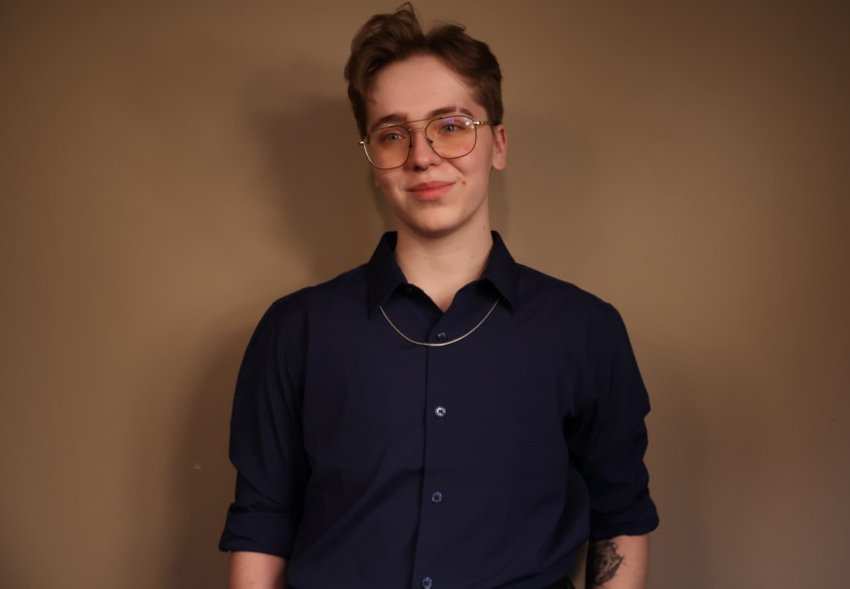
Levi Goethe-Bahlmann discovered his love for storytelling long before stepping onto the Toronto Film School campus. What began as a passion for directing theatre productions in high school has evolved into a multifaceted career in film in which the up-and-coming transgender filmmaker has honed his skills as a producer, director, and actor across countless student projects.
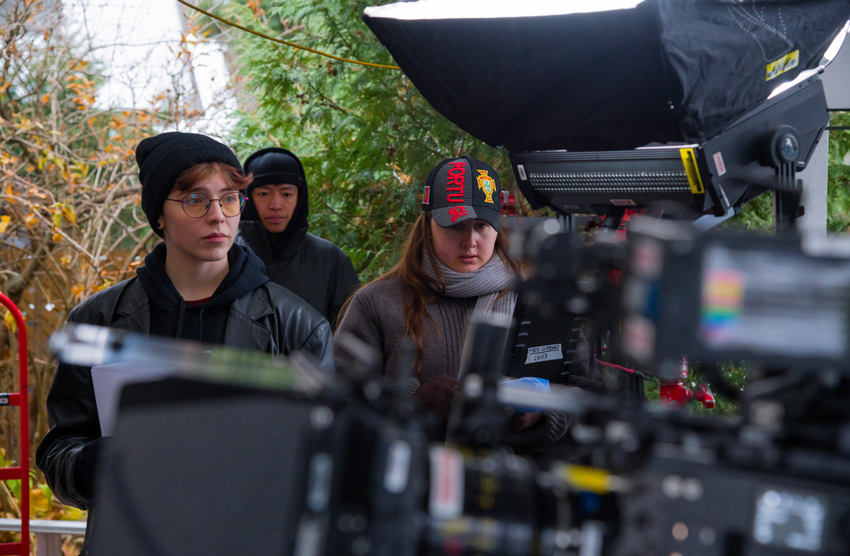
Throughout his time in the Film Production program at TFS, Goethe-Bahlmann distinguished himself not only through his creative vision but also through his leadership and dedication. As the 1st Assistant Director and Production Coordinator on the high-budget short film The Oddsmakers, he demonstrated the collaborative spirit and technical expertise that would become his hallmarks.
Now, as he prepares to address his fellow graduates at TFS’s upcoming convocation ceremonies, Goethe-Bahlmann reflects on his journey, the lessons learned, and what’s next as he continues to expand his work with a trusted crew of collaborators.
He recently sat down to discuss his experience at TFS, his approach to filmmaking, and his advice for aspiring creators. Here’s what he had to say:
What made you decide to pursue your passion for filmmaking at TFS?
So, this question has layers because my reasoning for pursuing film is separate from what drew me to TFS specifically. I was always a storyteller at heart; a lot of my childhood was spent creating videos or stop motion movies. I knew I wanted a career with some creative aspect but was also told I needed to pursue something stable. At the beginning of Grade 12, I convinced myself that Game Development would be a “safe” creative option. My logic was that coding was a lucrative skill, but I could also potentially have opportunities for creativity. Long story short, my Grade 12 programming class gave me a rude wake-up call. I realized about 2 months into the semester that I could not pursue a career in anything in the computer programming field. (Kudos to those who do; I have the utmost respect for you.)
At this point, I was freaking out a little because we had to submit our university applications soon, and I had planned my entire course load around this career path that I now knew would not work. The day of my epiphany, I visited the classroom of one of my favourite teachers on my lunch break. I explained everything to her quite frantically, and during my ramble, I admitted for the first time out loud that I wanted to pursue film as a career. It felt scary, but if I was gonna do something that scared me, I might as well go all in and pursue what I actually want. She listened intently and explained how Canada, and Toronto, specifically, is a really good place to pursue a career in film.
What she said next changed my life; she told me to research people in the industry whose lifestyle or career I admired/wanted something similar to. She told me to look at whether they went to film school or started their journey differently. I went home and did exactly that. A lot of people I admire in the industry went to Film School, and I personally wanted a post-secondary education. (I actually really enjoy school for the most part).
.
I then started researching film schools in the area. A few universities offered bachelor’s degrees in film, but when I came across Toronto Film School, I was drawn to the accelerated timeline. (I had a lot of confidence in my academic ability and knew I could handle it.) I also admired the fact that the instructors were industry active.
I spent a month prepping my portfolio requirements for my application. At the time, it was an essay on a film I enjoyed, and a 12-page original storyboard.
I decided to only apply to TFS in my grade 12 year. If I didn’t get in, I figured I would take a gap year and then apply to universities.
I got my acceptance email the same day I submitted my application. The rest is history.
Was there any particular film/TV show that compelled you to want to become a filmmaker yourself? If so, what was it and why was it so inspiring to you?
I feel like I can’t narrow down one particular film that compelled me to become a filmmaker. It was a culmination of things over the years. The first movie to ever make me cry was the 1999 Warner Bros. animated film The Iron Giant. Ever since, I have had a soft spot for stories following robots who discover their humanity; WALL-E, I, Robot, The Wild Robot, and even the game Detroit: Become Human.
I’m fascinated by the concept of humanity and connection. A lot of the aforementioned plots specifically centred around characters who were excluded or ostracized because they were misunderstood. I was always drawn to stories with that theme, especially when paired with a found family dynamic or an ending that centred around acceptance. Those films brought me a lot of comfort when dealing with bullying at a young age and facing discrimination for coming out as transgender later in life. I wanted to create films that offered that same comfort to people who felt the way I did.

What is the most important thing you’re taking away from your studies at TFS?
The most important thing I’ve taken away from my time at TFS is that skills can be taught, but attitude cannot. You can be the most skilled person in the room, but it won’t matter if no one wants to work with you. I was fortunate enough to have countless wonderful people take a chance on me, even when I was very new to the industry (new as in, the first or second term of film school). I learned a lot while working on student sets. I often learned skills about certain roles before we were taught them in class.
As I grow my career and assemble teams for projects, I also bring on people who seem to have a good attitude or are simply a pleasure to be around. The reason being, I know that they can be mentored, whether by me or another department. Your kindness and reliability are your currency in this industry.
What are your plans after graduation both immediate and long term?
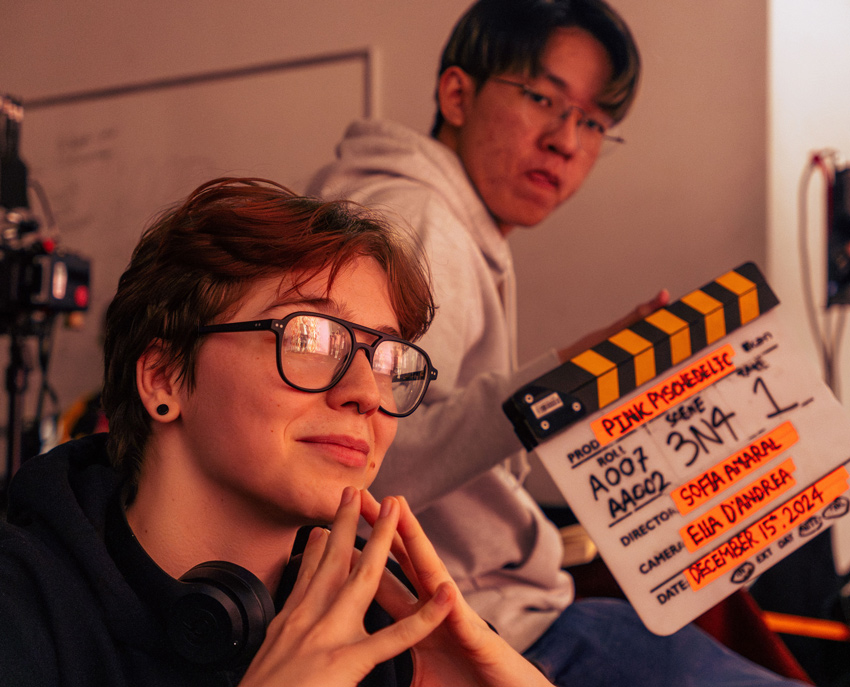
I feel like I have a different answer to this question every time someone asks me. There are a lot of options I could theoretically take, and sometimes it feels a little overwhelming. I have a few projects that I’m either actively producing or planning on getting off the ground sometime in the next year or so. I’m fortunate enough to have a full arsenal of experienced mentors to help me navigate funding these projects and get my footing in the industry. Additionally, I’m taking on roles as a Production Manager or Assistant Director on other projects to further expand my experience and network. I could potentially join a union like the Directors Guild of Canada (DGC) after getting enough hours on set, and I might explore that route when it becomes available. That said, being present with my active projects is my current priority.
If you offered one piece of advice to an incoming student, what would that be?
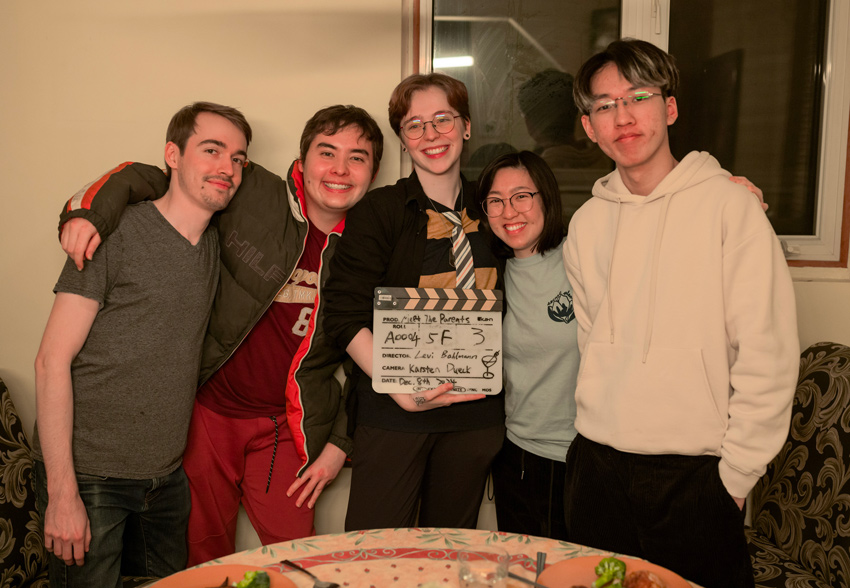
I’ve actually given advice to a handful of prospective students who have reached out to me. My advice differs depending on the questions asked, but the core of my sentiment always circles back to being open-minded. TFS teaches about a variety of film roles, and you might end up liking something you never thought about before. I’ve told the story before about how I entered film school thinking I wanted to be an editor and discovered how much I liked producing. Additionally, you’re gonna be around a wide variety of people, and sometimes they will have different ideas from you. If you shut it down before properly hearing them out, it could severely impact the quality of your projects.
The beauty of film is that there are so many different creative people who all get really skilled in this one particular area. That combination of diverse creative saturation is what brings stories to life. You obviously don’t have to agree to/do everything presented to you, but you risk losing more than what you could gain if you don’t hear someone out. Especially when it’s within their area of expertise. An example of this is my thesis, Meeting Damien.

.
This film is an absolute labour of love from all departments, and I wouldn’t have it any other way. I picked a team of people I trusted, gave them a lot of creative freedom within their roles, and they knocked it out of the park. To name a few: my Director of Photography (Karsten Dueck) created beautiful shots after I communicated how I wanted something to feel, my Production Designer (Julian Wagner) did more than I could have imagined by myself to bring the environment to life from set-dec to wardrobe, my post production team which consisted of my Editor/Writing Partner (Dave Stankoven) and Post-Audio Mixer (Amanda Cestri) were an integral part of bringing the story to together through story pacing both in the script & picture editing stages, followed by beautiful foley sound that immersed audiences even further.
My last piece of advice is: Don’t compare yourself to others. While this is true for most things, I find it was especially important to me in film school, and in the workplace. Everyone’s journey and career goals are different, so there’s really no use in getting bogged down in comparison. Obviously, learning from people with similar career goals is an important part of growth, and I often ask people questions when they have a career I admire or have experience in a pathway I’m considering. That being said, I noticed a lot of competition among students about how much they were on set while in school, and sometimes I received judgment for not trying to get on a set almost every weekend (especially in later terms). While I admire those who got on set as much as possible, especially when it made sense for their career goals, I knew that it wasn’t what I needed, and that’s okay! The roles I took on often required a lot of prep work before going to camera, therefore taking up a larger mental load. This resulted in me being more selective about projects I took on. There is no “one size fits all” method for building your film career; just do what aligns with your goals.
What’s your favorite film/TV show and why?
I don’t think I can choose just one, so you’re getting a list.
Movies:
I have a special place in my heart for the How To Train Your Dragon trilogy, The Iron Giant is a childhood favourite, and The Wild Robot is a recent favourite of mine. Crazy Rich Asians is an absolute masterclass in filmmaking. I recently watched Good Will Hunting for the first time (very late to the party, I know), and it’s definitely on my favourites list now. Forrest Gump is a movie I rewatch at least once every year or so. Serenity is hands down a cult classic, and The Dark Knight is likely my most re-watched film ever. Lastly, The Nightmare Before Christmas is a mandatory annual re-watch at any point between October and December. There’s more, but these are my favourites off the top of my head
TV Shows:
Bones is one of my all-time favourites. I’m in love with the character dynamics, and I feel like I could re-watch it forever and never get tired of it. How I Met Your Mother is another constant rewatch and a show I quote daily. I grew up watching Avatar: The Last Airbender, that kid’s show has no business having that much emotional depth, but I’m so glad it exists. I lived and breathed Doctor Who as a kid, specifically the Christopher Eccleston, David Tennant, Matt Smith era, and can’t forget Tom Baker.
Lastly, the cast chemistry in Firefly is absolutely unbeatable; it is the best example of a found family I’ve ever seen in a live-action TV series.

