
TFS Screenwriting Grad Adam G. Levine Takes the Director’s Chair for His First Feature
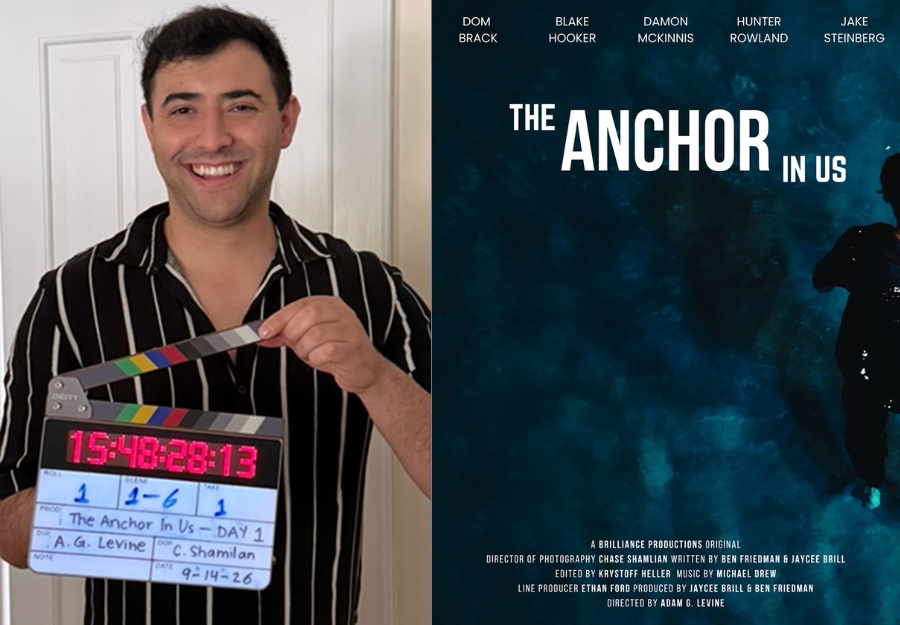
Not quite two years ago, Adam G. Levine stood on a film set watching another director bring his screenplay to life. This fall, he was the one calling the shots.
The Class of 2025 Toronto Film School Writing for Film & Television grad just wrapped shooting The Anchor in Us, his feature directorial debut. Shot in Kent, Connecticut last month, the film centres on the death of a college reunion’s host, using flashbacks to expose the secrets, private regrets and hidden motivations of those closest to him.
The leap into the director’s chair was a big one – especially for a filmmaker who graduated just last year – but Levine said the experience was everything he’d hoped for.
“It definitely lived up to the dream,” he said.
.
Landing the Job
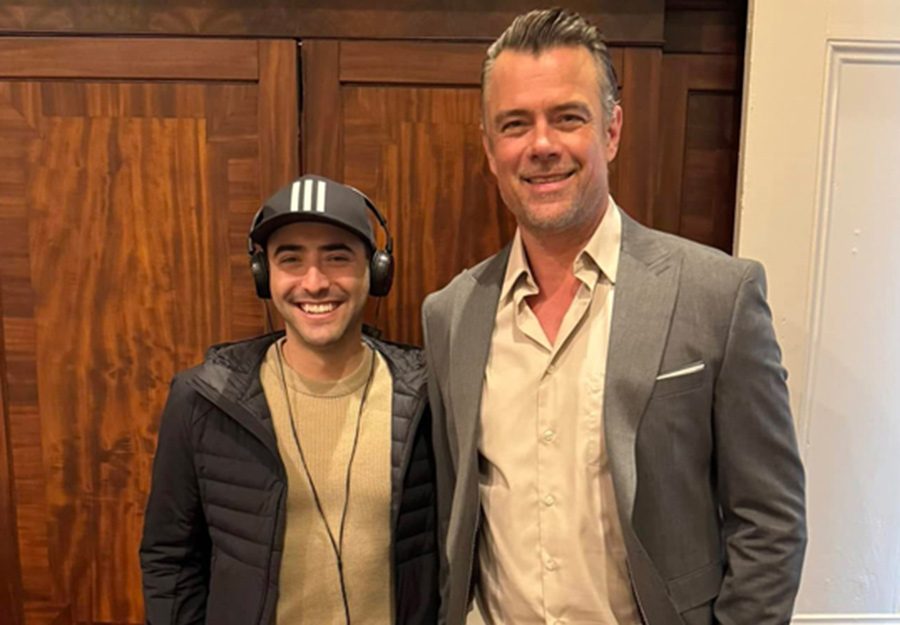
In December 2024, Levine had a front-row seat to what it looks like when someone else directs your words. On the Neglected set in Clinton, Mississippi, Josh Duhamel and Dylan Sprouse brought his screenplay to life under the helm of director David Lipper – and Levine was there to watch it all unfold.
“I couldn’t believe how huge the production was…and the cast, budget, setting, crew, and everything was just so beyond my wildest dreams and expectations,” he said at the time.
Since then, Neglected – the thriller he co-wrote and executive produced – premiered at Hollywood’s TCL Chinese Theatre in May and is now streaming on Hulu, where it debuted at #3 on the streamer’s Top Movies list.
.
Despite the massive successes he achieved with Neglected, Levine was still left asking himself what came next when all the excitement around the film started to settle down. A mentor suggested directing, and a week later, a LinkedIn connection from Brilliance Productions President Ben Friedman appeared in his inbox.
Levine sent Friedman a quick thank-you note, and the two got talking. They soon realized they had a connection in Lipper. When Levine met with Friedman to pitch some of his own projects, Friedman asked if he’d be interested in directing a film for him and Jaycee Brill, founder and CEO of Brilliance Productions.
“I didn’t even bring up directing,” Levine said, noting he was hesitant about the idea at first, since he’d been focused on his own material. But when a meeting cancelled right after his call with Friedman, he ended up sitting down to read The Anchor in Us script and was immediately sold.
“I called him back and I was like, ‘I don’t care what you say, this script is mine,’” he recalled, laughing. “I just thought it was an amazing, beautiful, lovely story.”
Aware that he wasn’t the only one up for the job, Levine went all in on his pitch to sit in the director’s seat for the film, which was written and produced by Friedman and Brill.
“I knew I had some competition, so I just kept sending mass emails of all the ways I would do this story,” he said, noting that his efforts paid off by July, when he was hired on as director.
A Team Approach
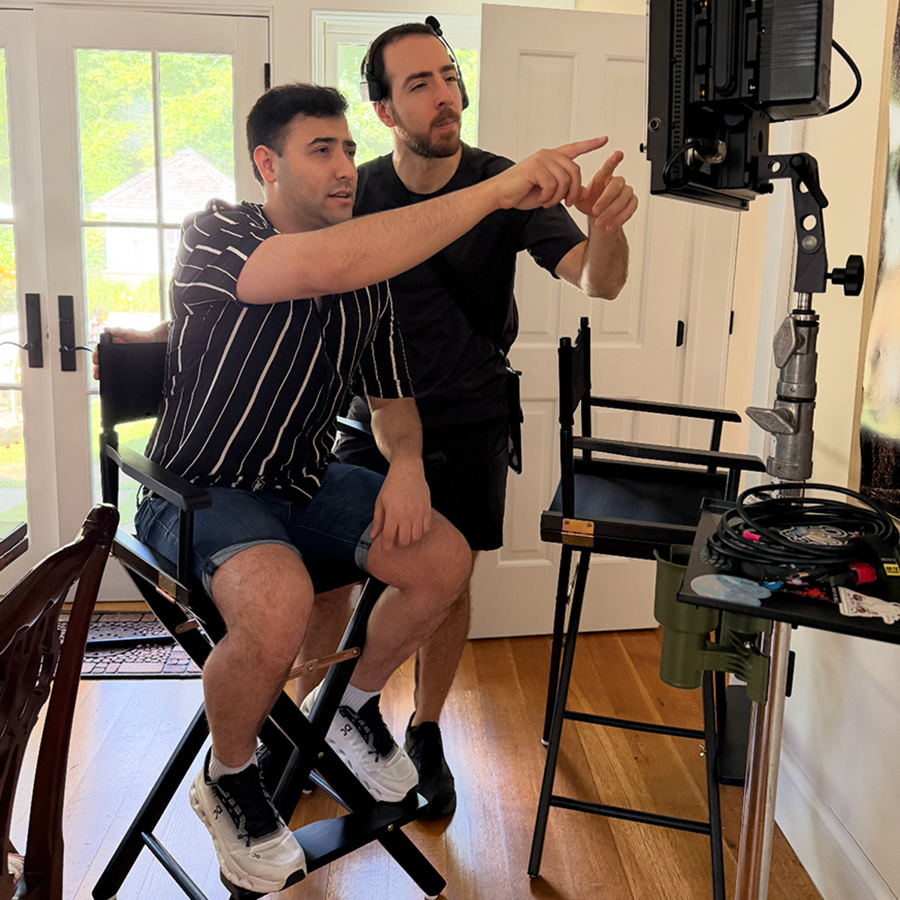
Directing a story written by someone else was a new experience for Levine, who had seen his own screenplay come to life on Neglected. It also came with a responsibility to Friedman and Brill, as the film’s writers.
“It was extra pressure, not from them, but the extra pressure of wanting to make sure I truly delivered this story that they had worked so hard on,” he said, noting that his solution was to keep them both close on set.
“I told them, ‘I know I’m the director, but I want you guys beside me after the shots. If you feel like anything is missing, tell me!’ Because I believe in a team approach.”
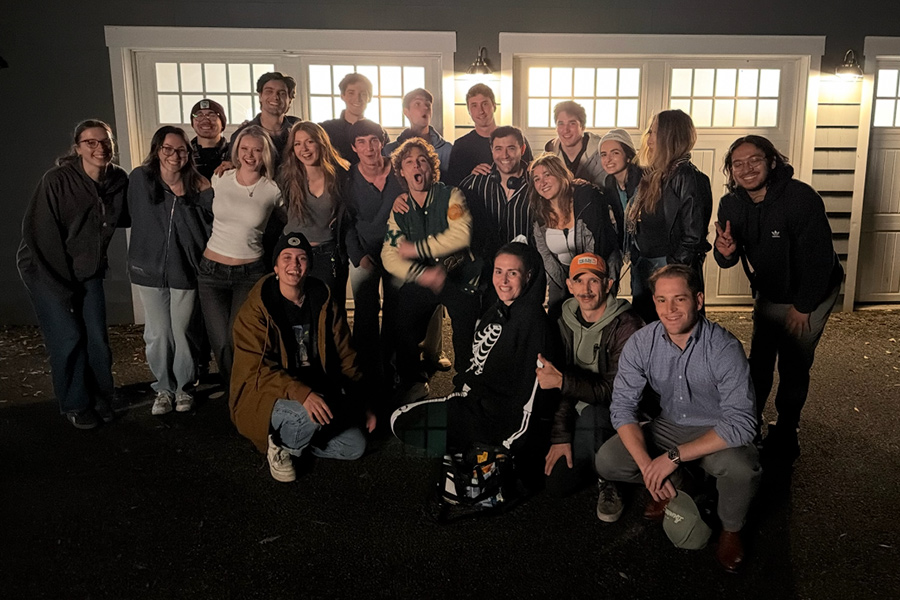
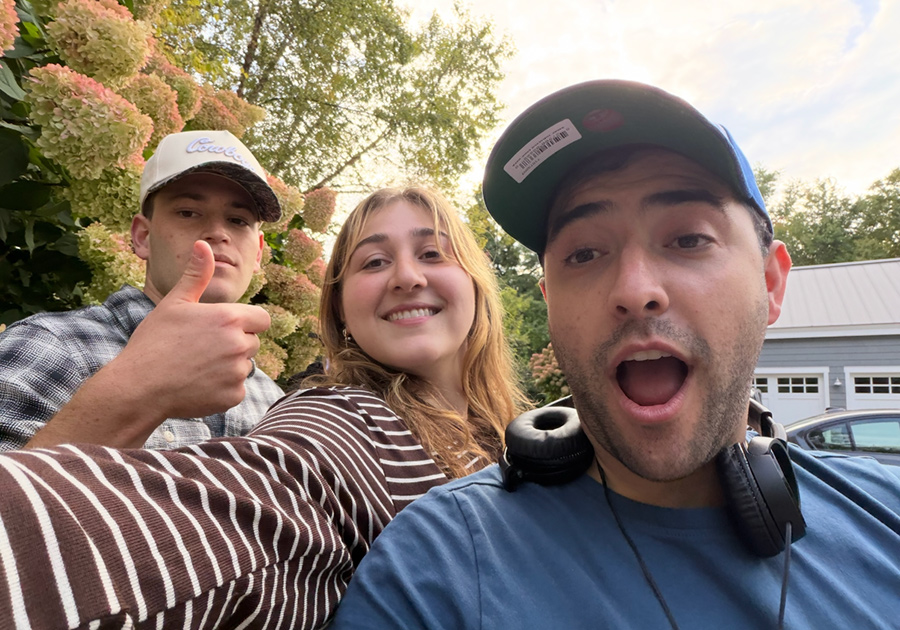
With Levine at 26, Friedman at 25, and Brill at 24, the on-set leadership for The Anchor in Us was a young one. That youthful spirit also extended to the cast and crew – most of whom were also in their 20s.
At its core, the film is about a group of friends who begin to realize there are deeper demons within the circle than they understood – a theme that drew Levine in because of his commitment to mental health advocacy.
“I’m an advocate for mental health, and I think this film is a perfect example of what would happen if people deny they need help,” he said.
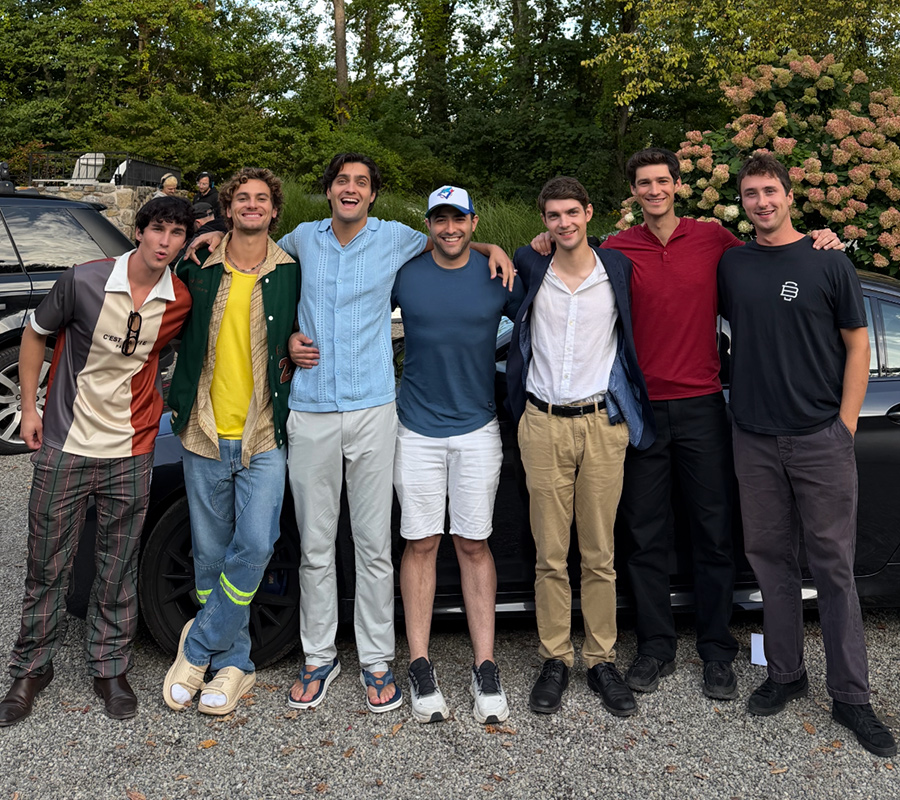
That same commitment carried into casting his leads – including Blake Hooker, Dom Brack, Hunter Rowland, Jake Steinberg and Damon McKinnis – where Levine wouldn’t compromise on talent.
“The one thing I refused to do was cast people just for their followers without any acting ability,” he said, noting the result was a cast that went above and beyond. “They were just so passionate about the film. You couldn’t have asked for a more perfect cast.”
Lessons From the Set and the Classroom
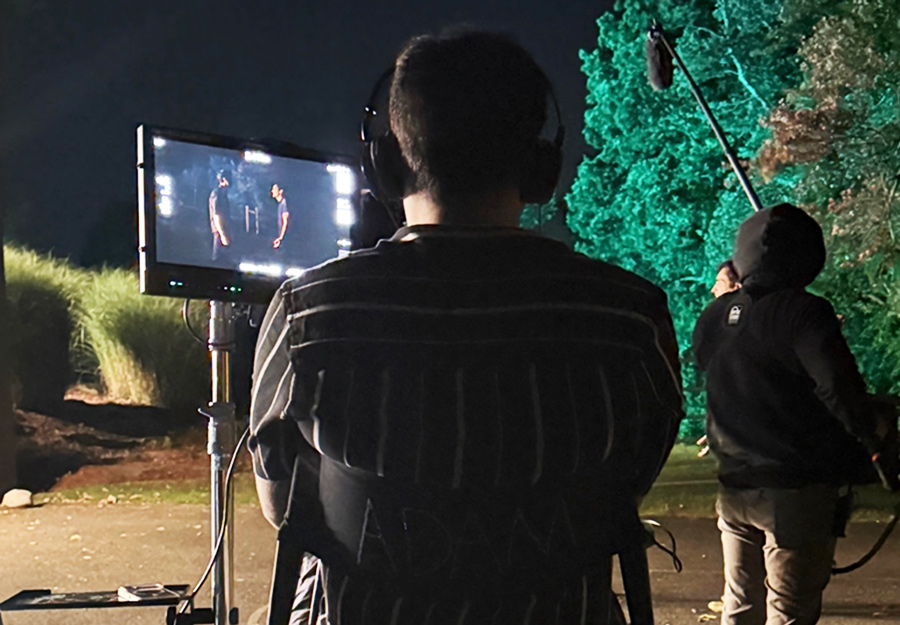
Levine credits a tight-knit team, including his assistant directors, script supervisor and director of photography, for keeping the production on track.
“We made sure everything was on schedule. We paid attention to the blocking. We did rehearsals. We made sure the cast were properly prepared,” he said, noting that the team even found room to add scenes. “We added three scenes and I shot 12 pages in one day.”
He also took lessons from what he saw on the Neglected set: “David Lipper worked really hard on Neglected and one of the things I respected was his pacing and time management. And I took that to set from what I saw from David.”
Closer to home, Levine leaned on his TFS network after landing the job, calling on the likes of TFS President Andrew Barnsley, VP Academic Adam Till, and instructors Alan Resnick and Dave McGrath for notes.
Their advice, he said, was simple: “They all said trust your AD. They said the shot list is crucial.”
Looking back at his time at TFS, Levine said he now encourages current students to embrace every course, especially the hands-on ones.
“All those classes where they have you doing live things…or factual entertainment when you have to shoot your own sizzle – it taught me to be in the field and it taught me about proper time management, which is so important when you’re directing,” he said.
What’s Next
The Anchor in Us is now in post-production. Levine and the team are working on a sizzle reel for the American Film Market, and he expects the film to be finished before the end of the year.
What he’s most looking forward to is audiences seeing the finished film.
“I’m excited just for it to be shown to the world, because I truly think the writers did a great job representing mental health,” he said.
His advice to aspiring filmmakers is simple. “Don’t take no for an answer. You are your own agent and manager,” he said. “I think everyone can make it. It’s just about believing in yourself.”

