
Writing Her Own Story | Q&A with TFS Student Graduation Speaker Sana Ehtasham

Sana Ehtasham has always found ways to bring stories to life – be it through acting, fashion design, producing or directing.
This year, the Writing for Film & Television graduate was selected as the Student Graduation Speaker for Toronto Film School’s 2026 Convocation Ceremony, recognizing both her accomplishments in the program and her contributions to the TFS community.
Originally from Pakistan, Sana began acting at a young age, appearing in television commercials, theatre productions and TV dramas. Her creative journey eventually led her to fashion design and filmmaking, before she enrolled at TFS to further develop her storytelling skills. Throughout her studies , she earned a 4.24 CGPA and repeated recognition on the President’s List and Honours List.
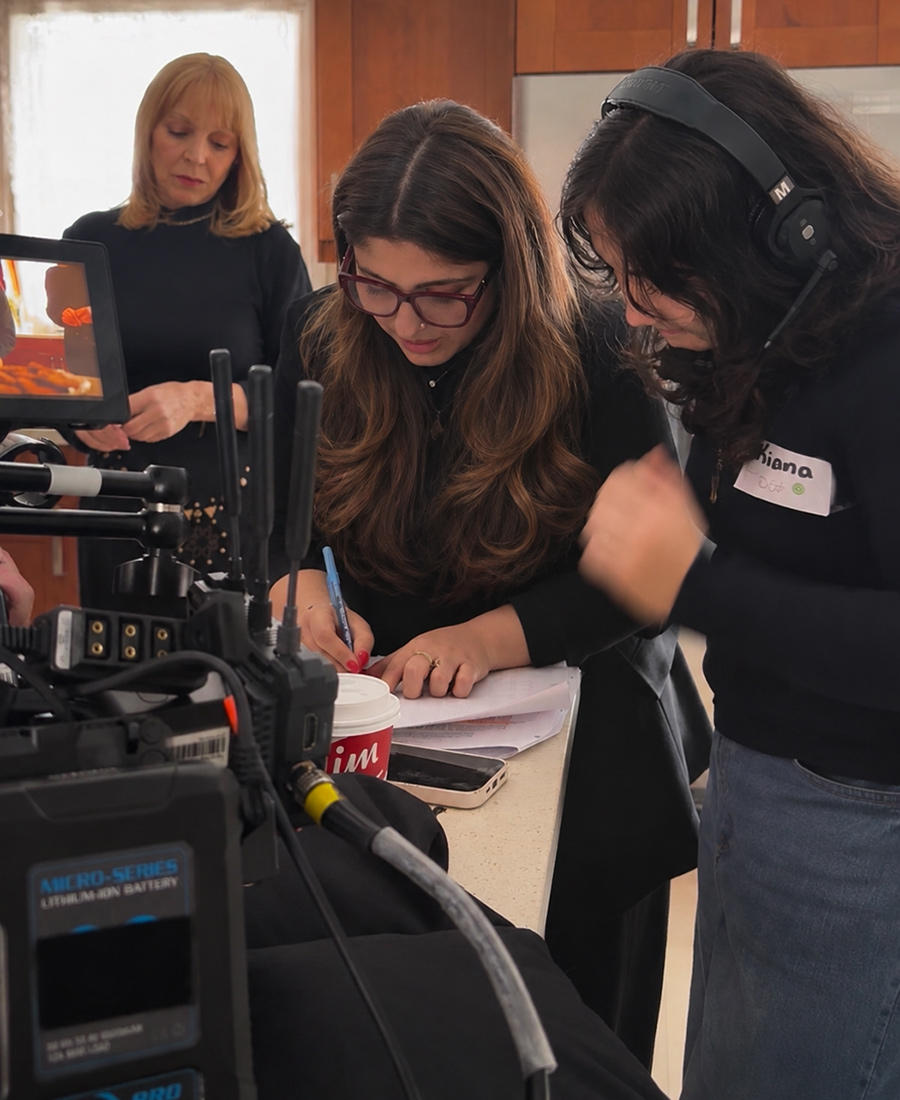
Beyond the classroom, Sana was an active member of the TFS community, participating in Campus Council and Student Activity Council, serving as a peer tutor and collaborating with students across programs. She also developed and produced her greenlit thesis film, The Tea Party, taking the project from its initial concept through production.
She recently sat down to discuss her creative journey, the lessons she learned at TFS and her ambitions for the future. Here’s what she had to say:
You bring a background in fashion design, producing and directing. What made you decide to pursue your passion for screenwriting at TFS?
Storytelling has always been part of who I am. I began acting at a young age in Pakistan, working in television commercials, theatre, and TV dramas. Over time, I found other ways to express my creativity through fashion design, producing, and directing.
For me, screenwriting is where everything begins. A powerful story can make people laugh, cry, question their beliefs, and sometimes even change the way they see the world. I wanted to turn my ideas and experiences into stories that could connect with audiences across cultures.
I chose Toronto Film School to learn from instructors with industry experience. I wanted mentors who would challenge my choices, help me strengthen my writing, and give me the space to develop my own creative voice.
Was there a particular film or TV show that made you want to become a screenwriter yourself? If so, what was it and why was it so inspiring to you?
The Age of Adaline, written by Salvador Paskowitz and J. Mills Goodloe, made me want to become a screenwriter. Adaline stops ageing while everyone around her grows older. What impressed me was how the writers made the emotional consequences of that impossible premise feel real. Her condition creates the mystery, and her fear of losing the people she loves gives that mystery emotional weight. I wanted to learn how to take an idea from my own imagination and give it that kind of emotional depth.
I’m drawn to psychological thrillers and mysteries, sometimes with a touch of horror. I also admire how Alfred Hitchcock and Christopher Nolan use suspense to make audiences question what they think they know. In my own films, I want to entertain people and keep them guessing while exploring how we respond to fear, grief, and uncertainty.
During your time at TFS, you took your thesis film, The Tea Party, from concept to completion, and were involved in Campus Council, Student Activity Council and peer tutoring. What is the most important thing you’re taking away from your studies at TFS?
My biggest takeaway from Toronto Film School was understanding my own creative process, showing up for myself, and working consistently on our projects as we developed our skills as writers, directors, and producers. What I absolutely love about TFS is its diversity. Working with people from different cultures and backgrounds showed me how differently we can see the same story and how much we can learn from one another. I’m grateful to our instructors for seeing potential in us and giving us the feedback we needed to grow.
Through Campus Council, Student Activity Council, and peer tutoring, I met wonderful people and had the chance to put ideas into practice. Those experiences taught me that leadership means listening, supporting others, and working together to turn an idea into something people can benefit from.
What are your plans after graduation, both immediate and long term?
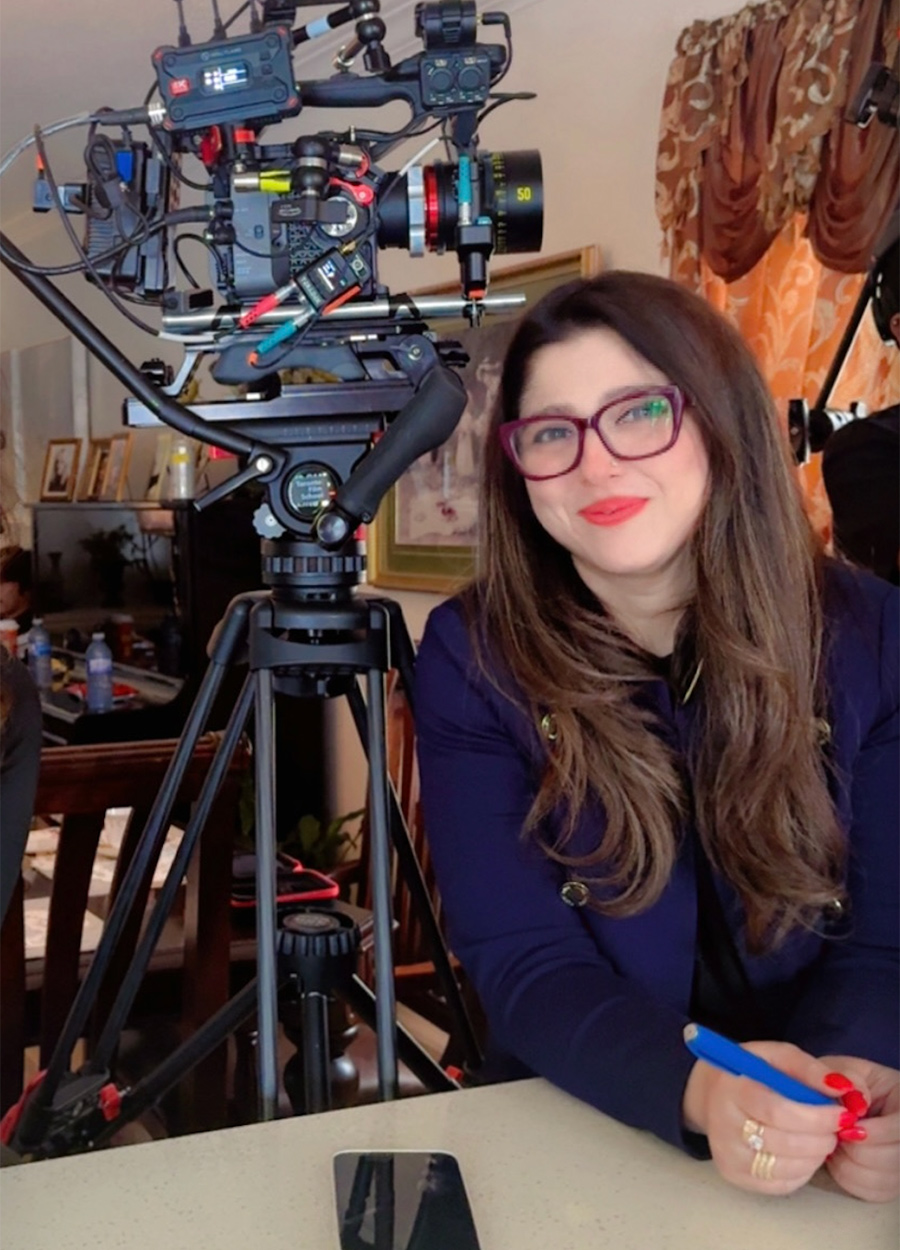
My immediate focus is bringing my short film, The Tea Party, to festival audiences. I’m also preparing to shoot my next short, producing other film projects, and writing a feature and a web series.
Long term, I want to build an independent production company and write and direct feature films that reach audiences around the world. I’m drawn to stories that explore how larger social issues shape the private choices people make.
I want to make films that hold an audience’s attention. And yes, I would love to win an Oscar one day. That’s an ambition I’m happy to say out loud.
You balanced a 4.24 CGPA with leadership roles and producing. If you could offer one piece of advice to an incoming student, what would it be?
My advice is to be your own most honest critic and your strongest supporter. Be clear about where your work needs to improve, and give yourself credit for how far you’ve come. Confidence grows when you try something unfamiliar, learn from the experience, and give yourself another chance to get better.
Time blocking helped me balance school, filmmaking, leadership roles, and family life. I set aside time for studying, creative work, meetings, and family so I could give each responsibility my full attention.
I’d also encourage students to get involved beyond the classroom. Volunteer on a project, ask someone how they approach their craft, or reach out to a classmate whose work you admire. Working alongside people who see things differently can teach you as much as an assignment, and those relationships can lead to collaborations long after graduation. Most of all, don’t compare your journey with anyone else’s. Give yourself time to develop your own creative voice. Celebrate the small wins, keep experimenting, and tell the stories you want to tell. Consistency matters more than perfection.
What’s your favourite film or TV show and why?
It’s difficult to choose just one, but Christopher Nolan’s Inception is one of my all-time favourites. I’m drawn to films that challenge the way we think while keeping us emotionally invested in the characters. Inception does both. Its world is built around dreams within dreams, but the question at its centre is deeply human: how do you move forward when you’re still holding on to the past?
As a screenwriter and filmmaker, I admire how Nolan uses the story, images, and sound to make us question what we’re seeing. The first time I watched it, I wanted to know what was real. When I returned to it, I paid more attention to how grief and guilt shape the choices the characters make. That’s what I value in a great film. It can hold your attention the first time and give you a different experience when you come back to it.

