Toronto Film School Celebrates Class of 2026 with a Call to Take Chances and Embrace the Unexpected
In This Article

“You cannot build an extraordinary life while constantly protecting yourself from ordinary failure.”
That was one of the powerful messages actor, filmmaker and entrepreneur Shamier Anderson shared with Toronto Film School‘s Class of 2026, encouraging graduates to embrace uncertainty, take chances and trust themselves as they embark on their creative careers.
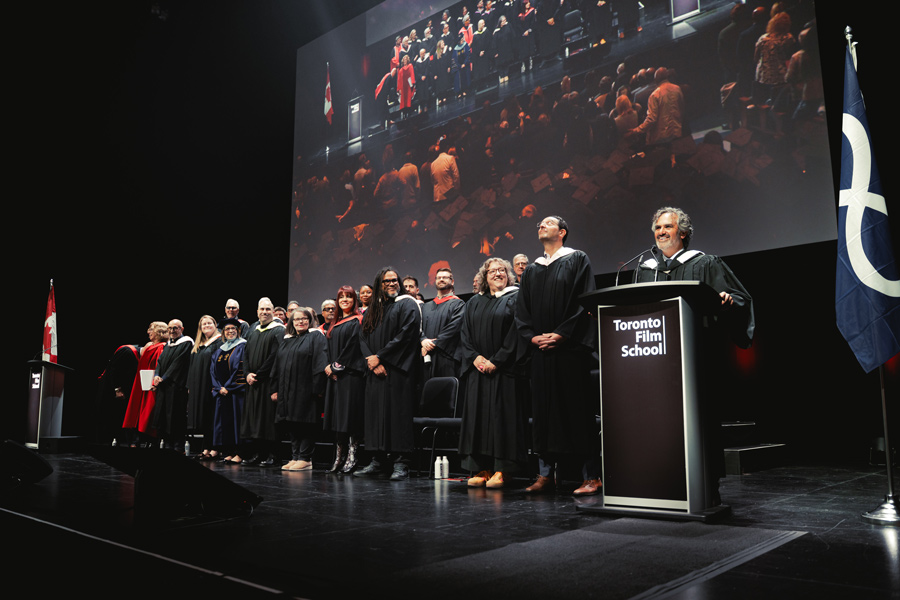
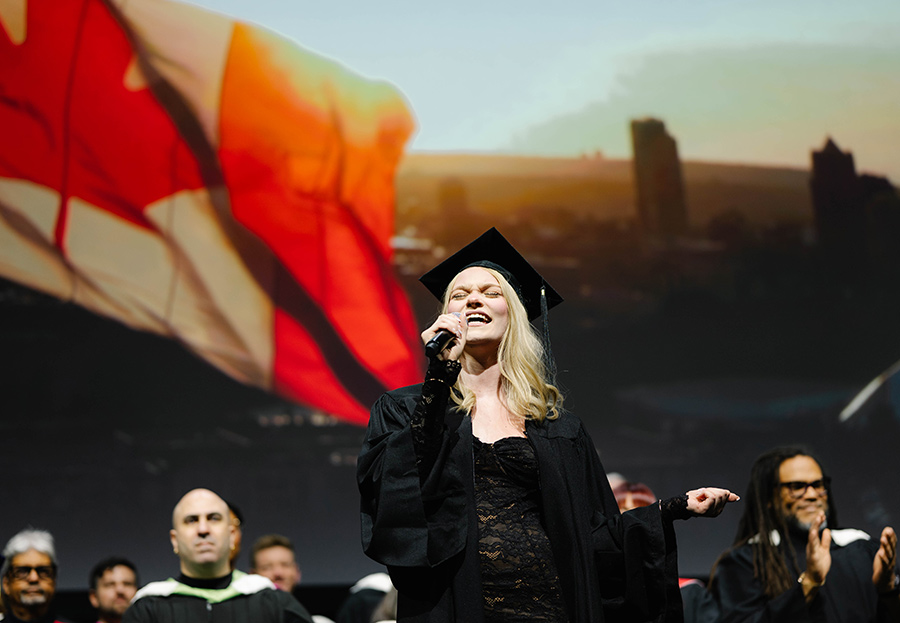
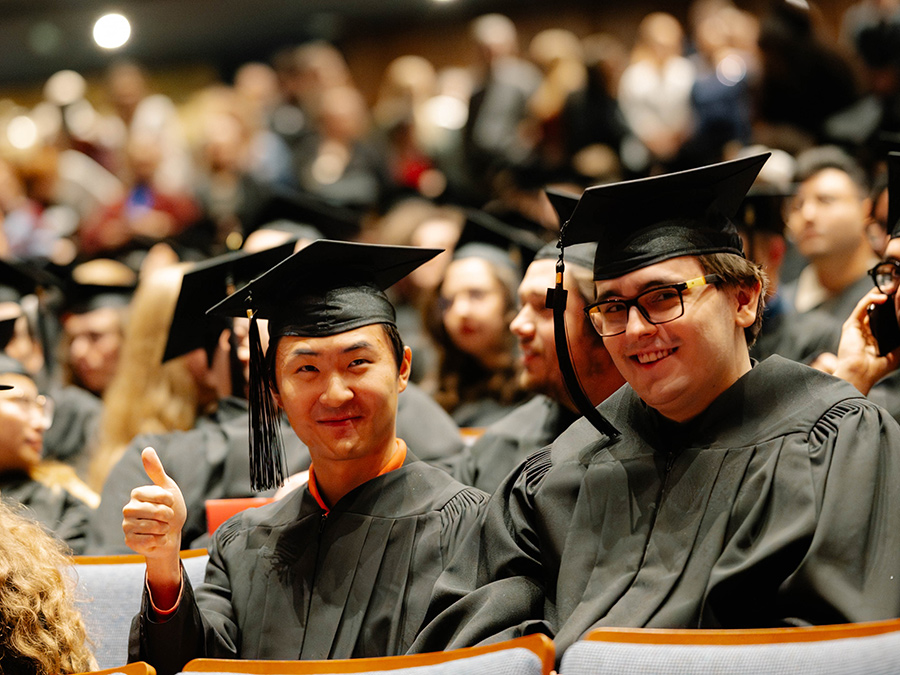
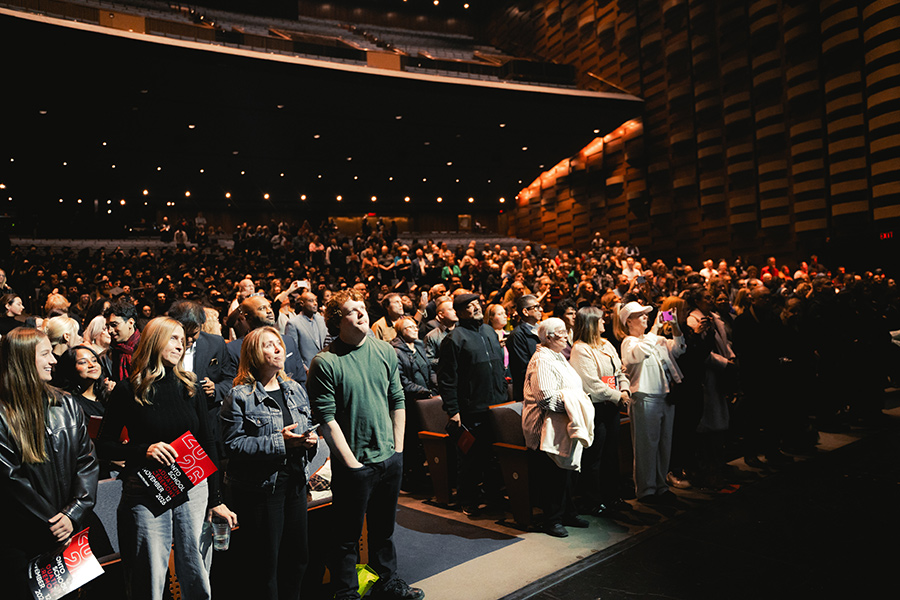
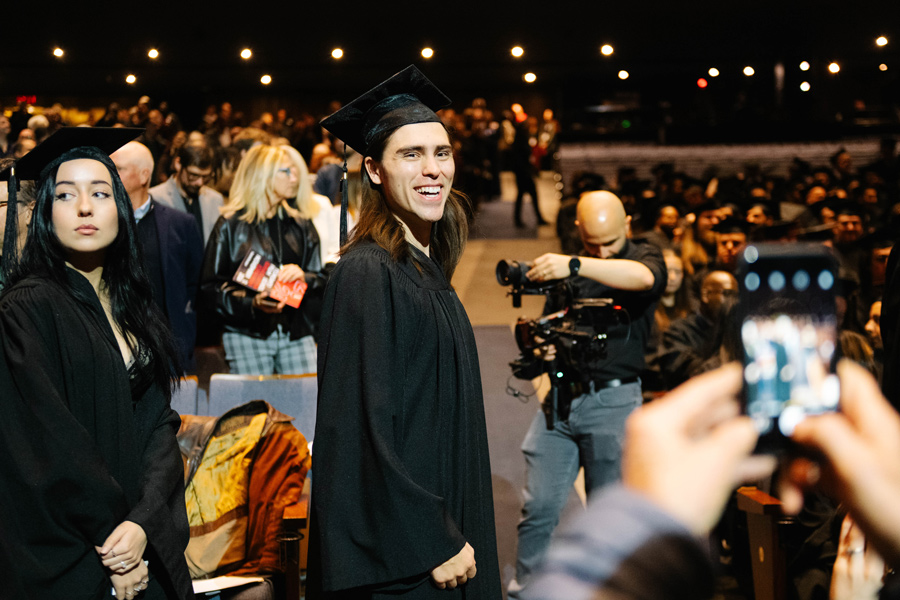
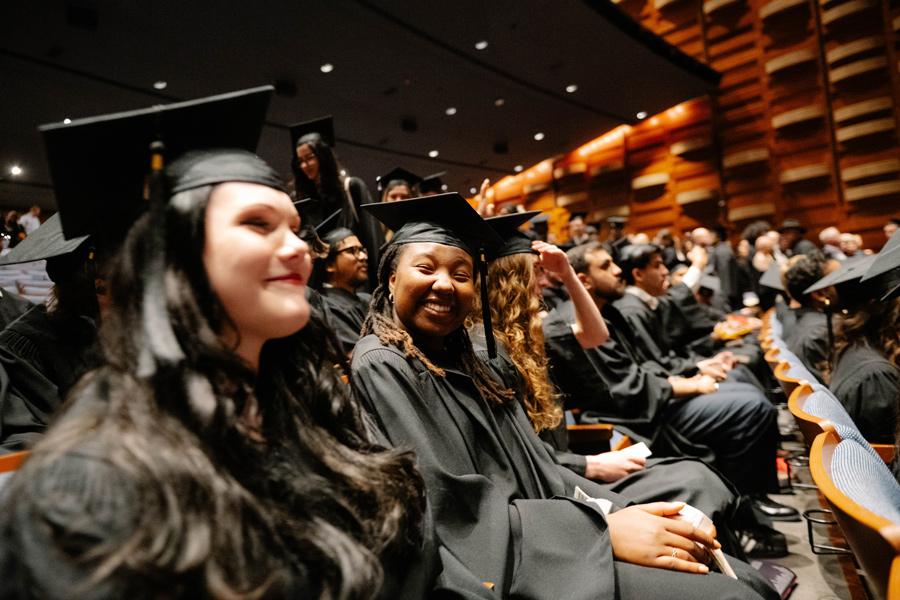
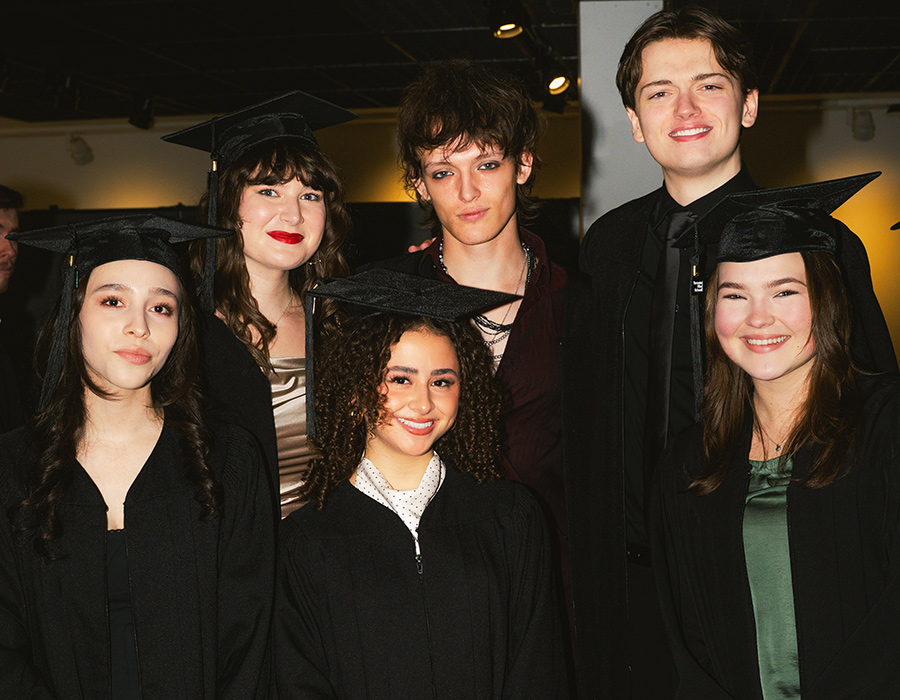
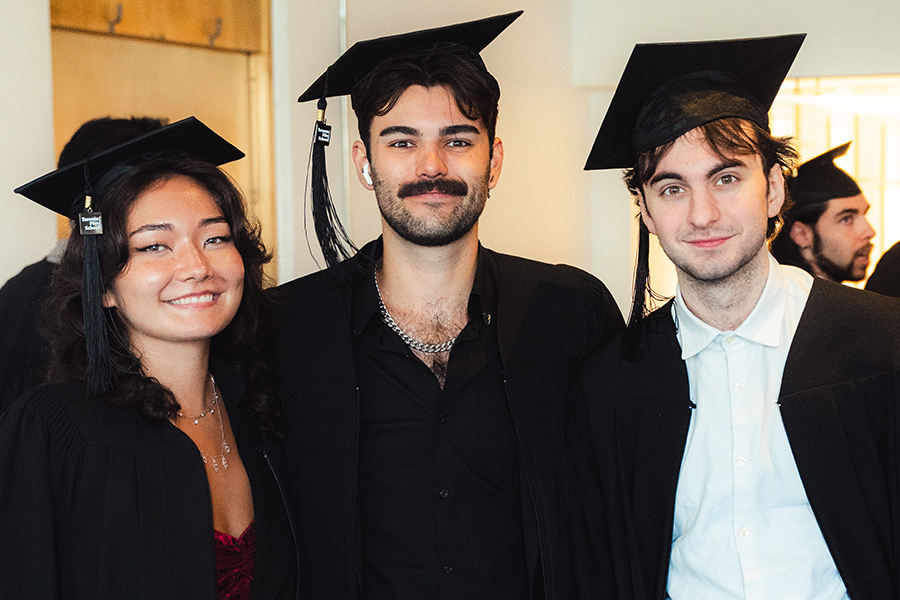
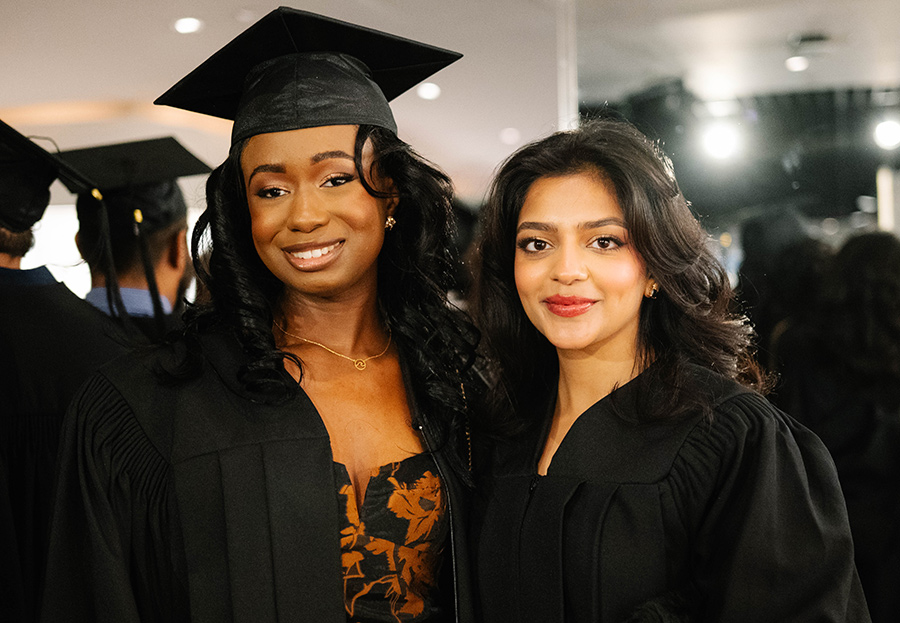
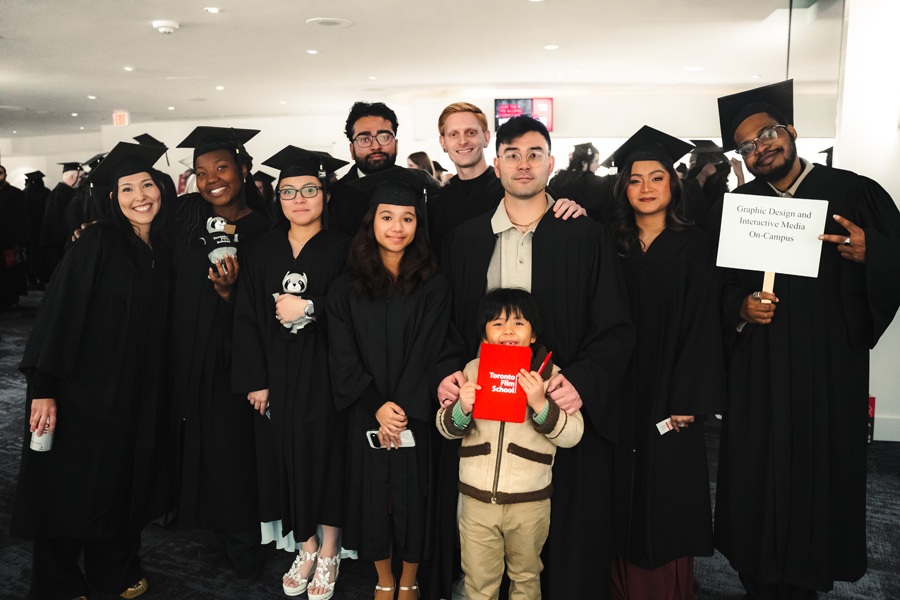
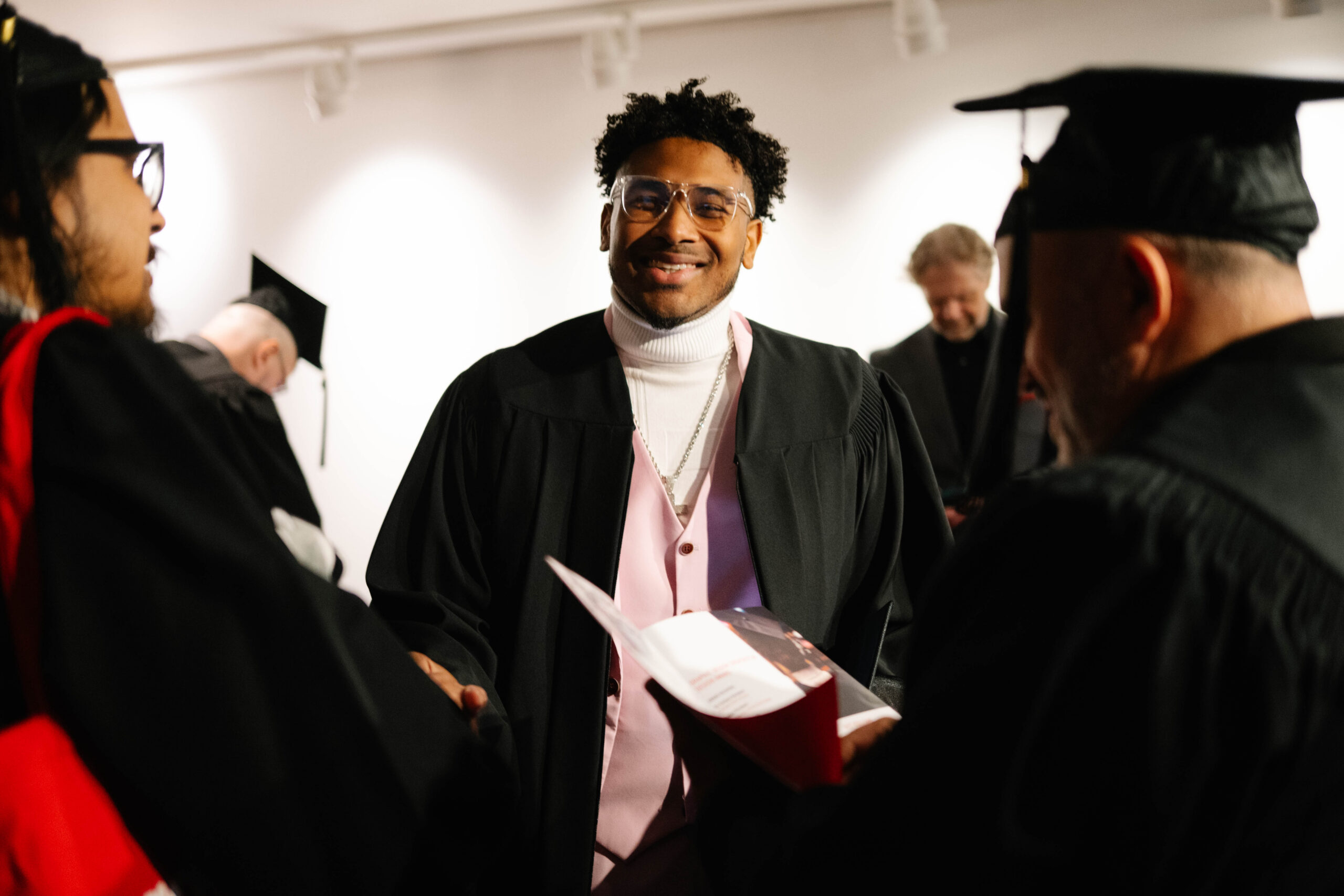
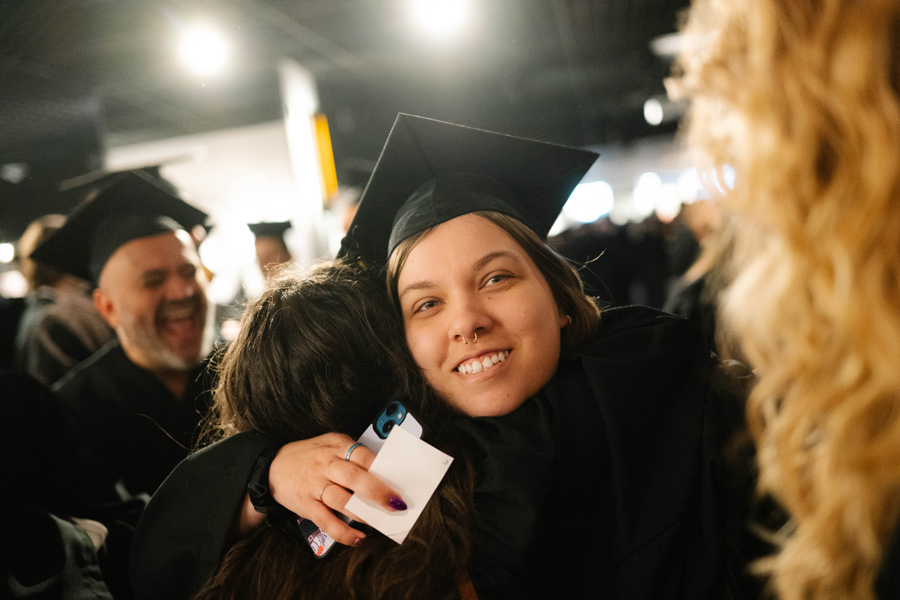
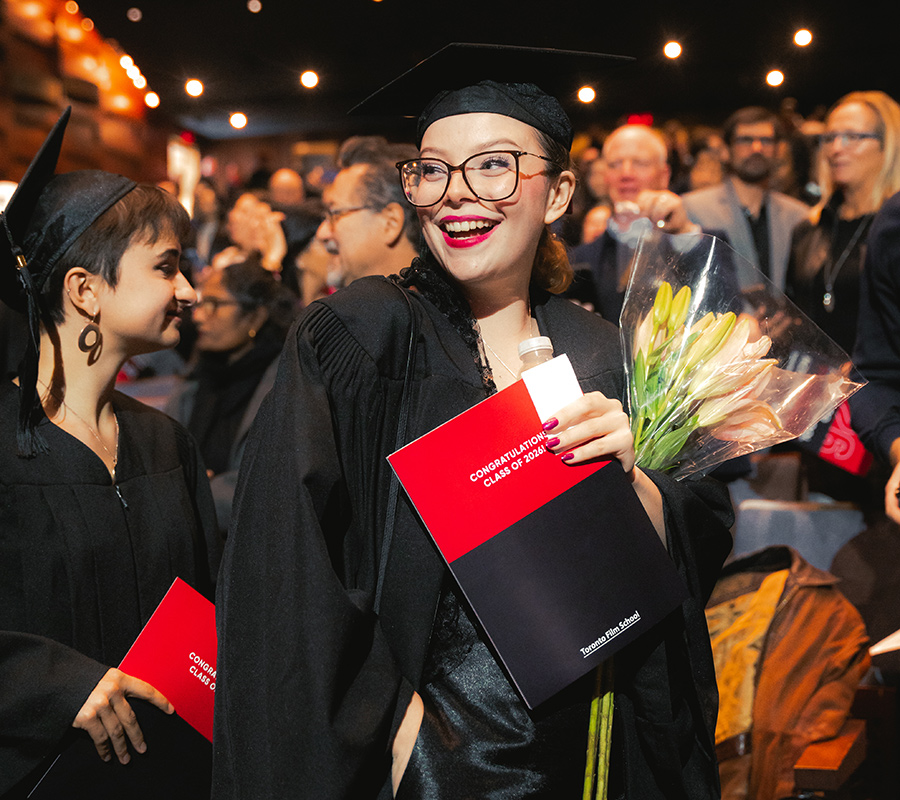
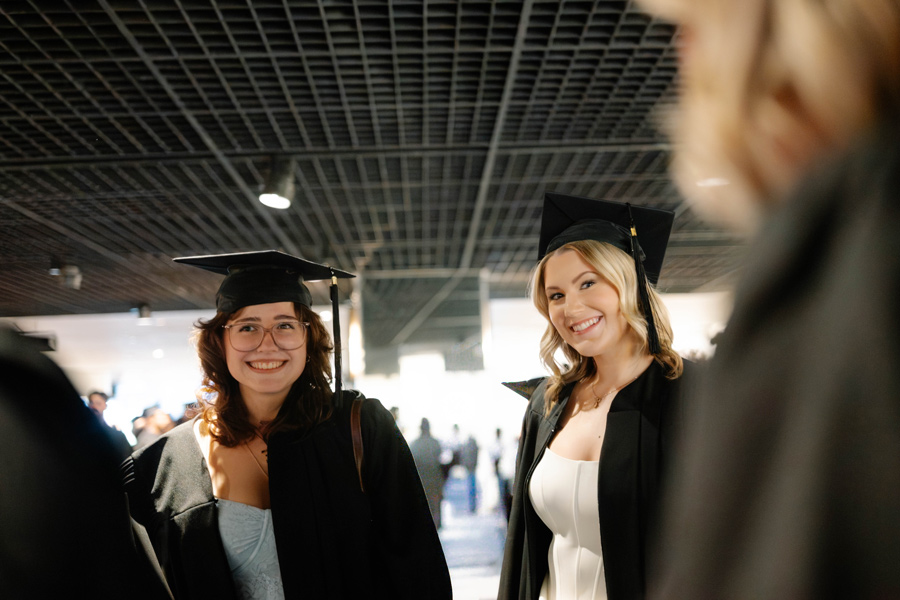
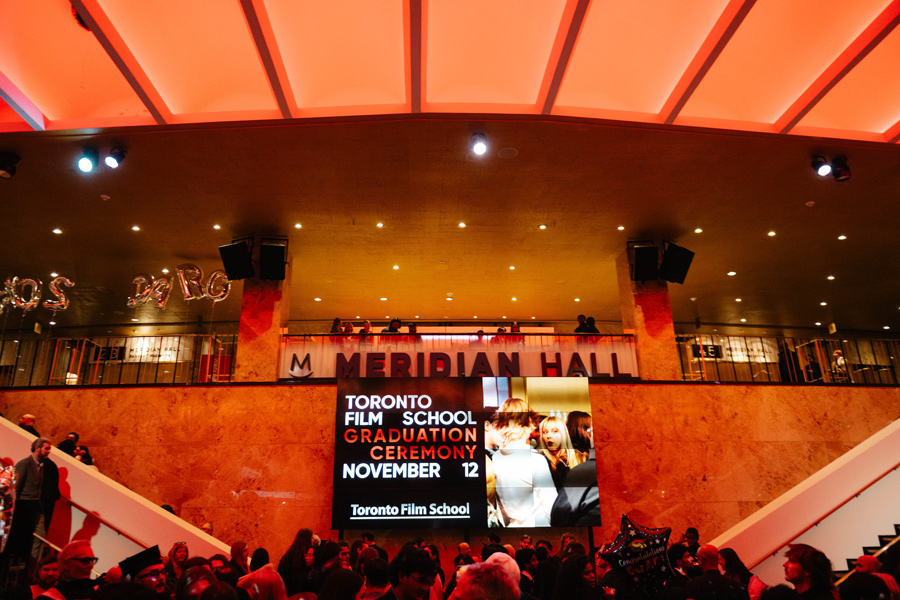
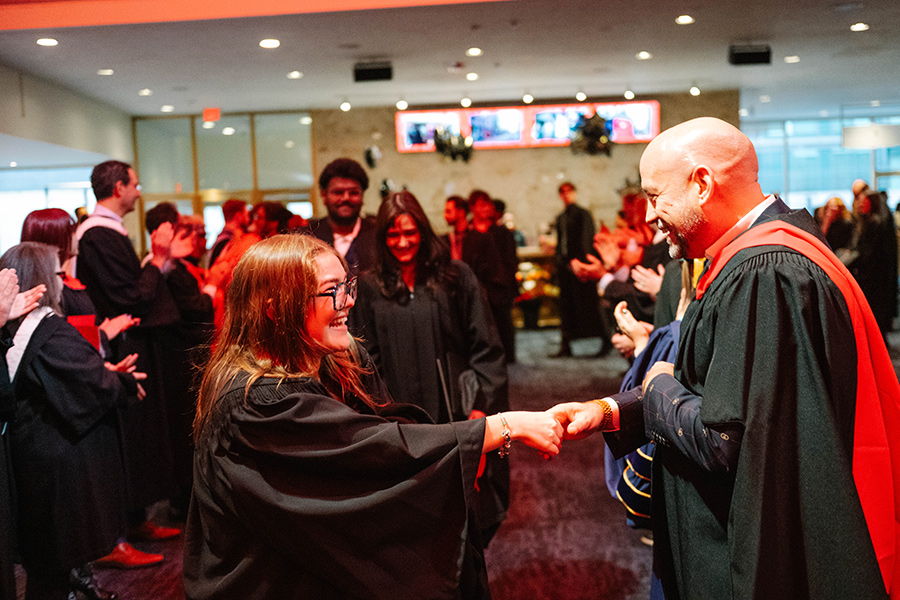
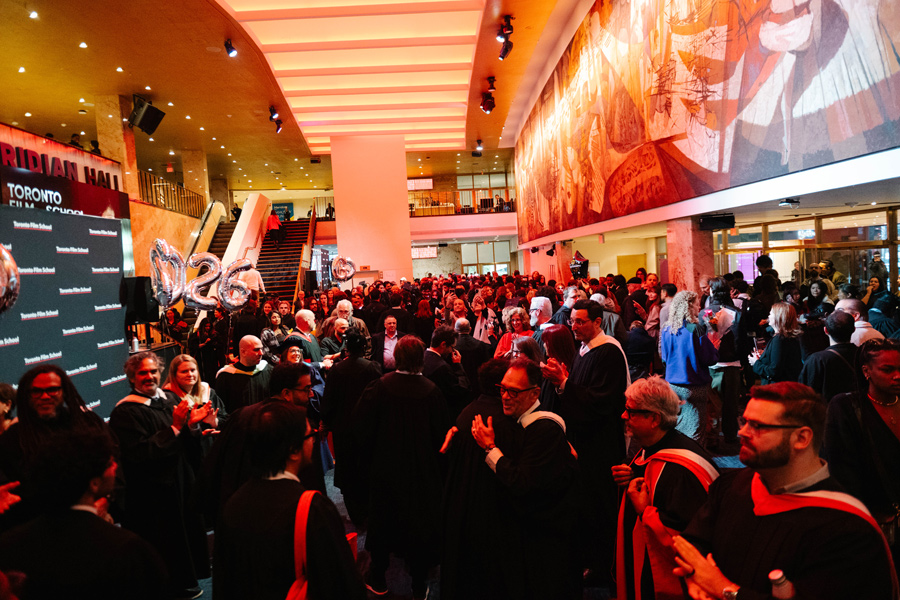
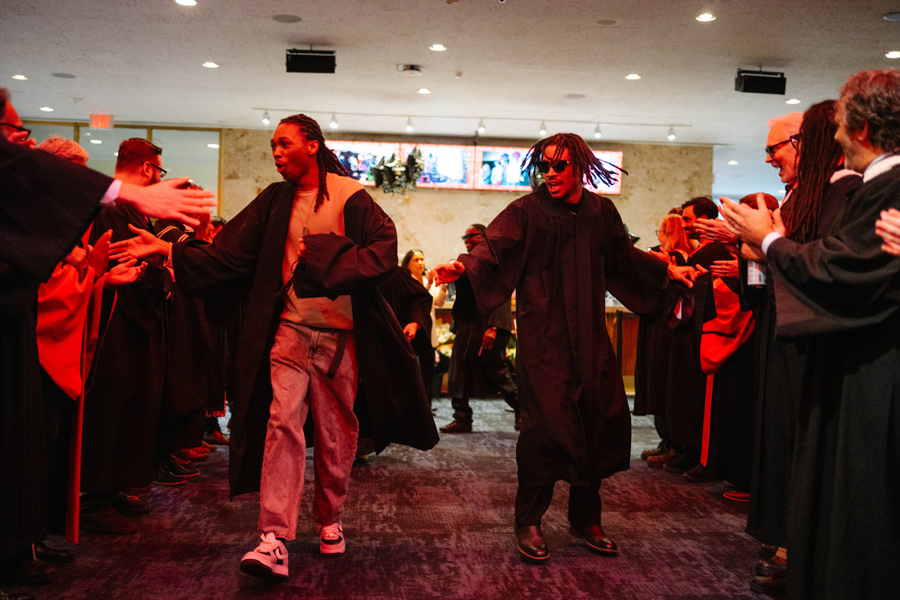
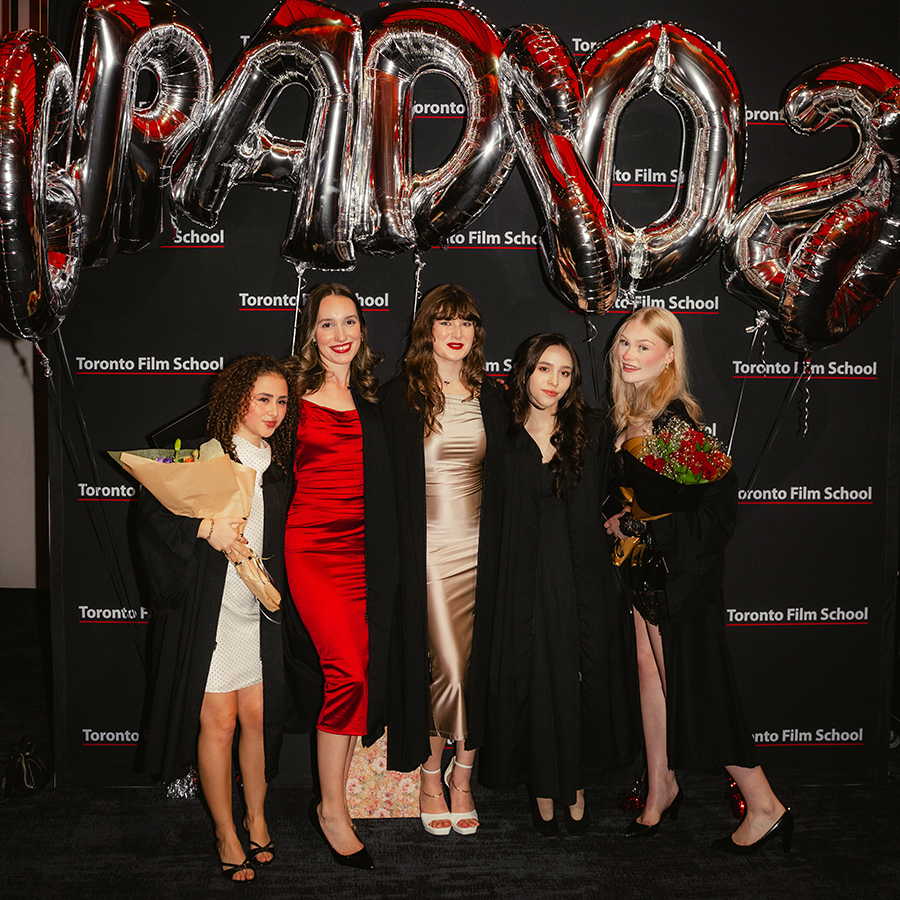
The advice resonated throughout TFS’s November 12 convocation ceremony, where more than 350 graduates from across TFS’s on-campus and online programs were celebrated – including the 228 who gathered with family, friends, faculty and supporters to celebrate their achievements in person at Meridian Hall.
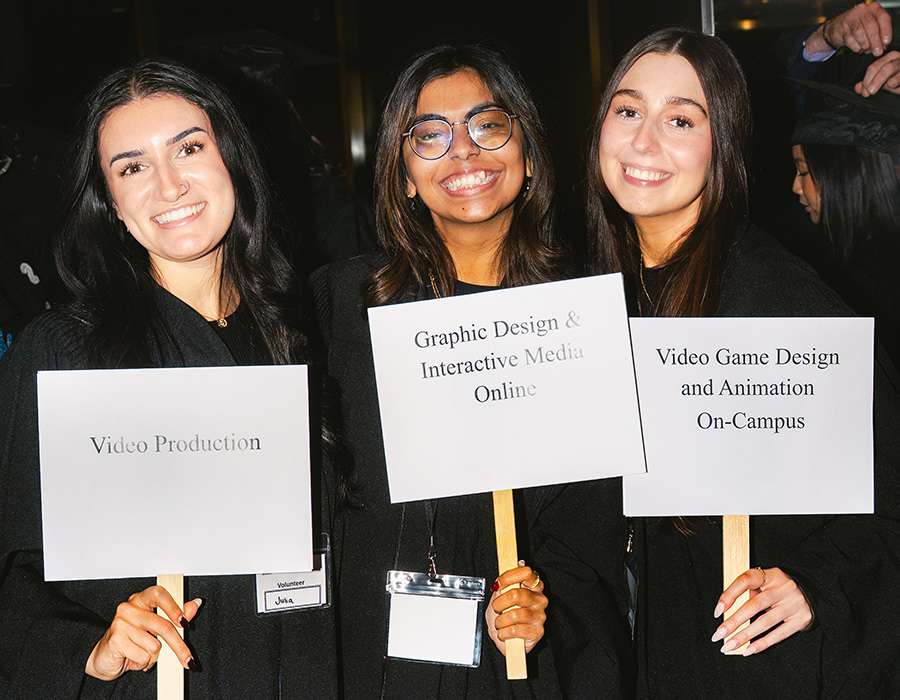
The graduating class included students from TFS’s Film Production, Acting for Film, TV & the Theatre, Writing for Film & Television, Graphic Design & Interactive Media, Video Game Design & Animation, Video Game Design & Development, and Video Production programs.
Paul Irvine’s Opening Remarks
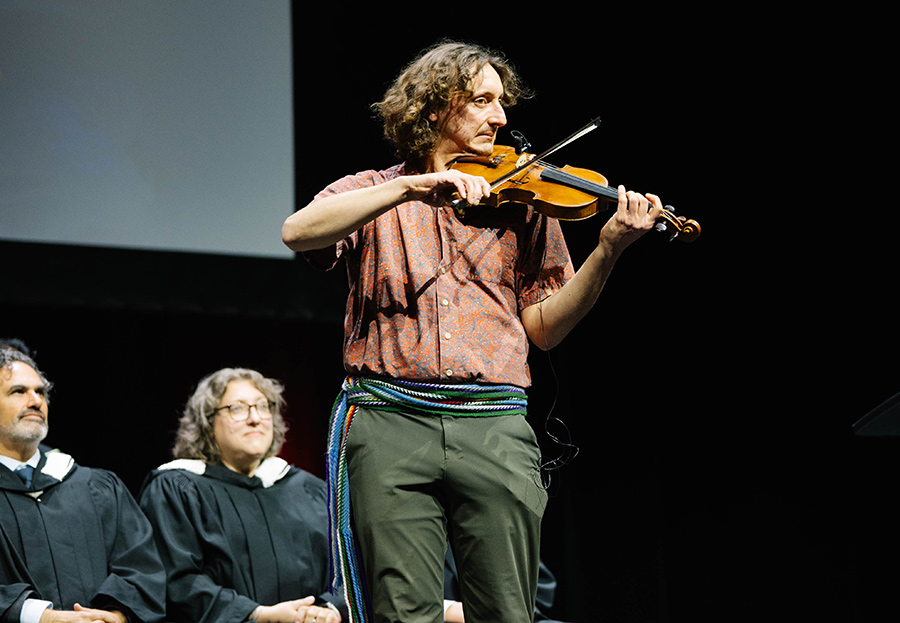
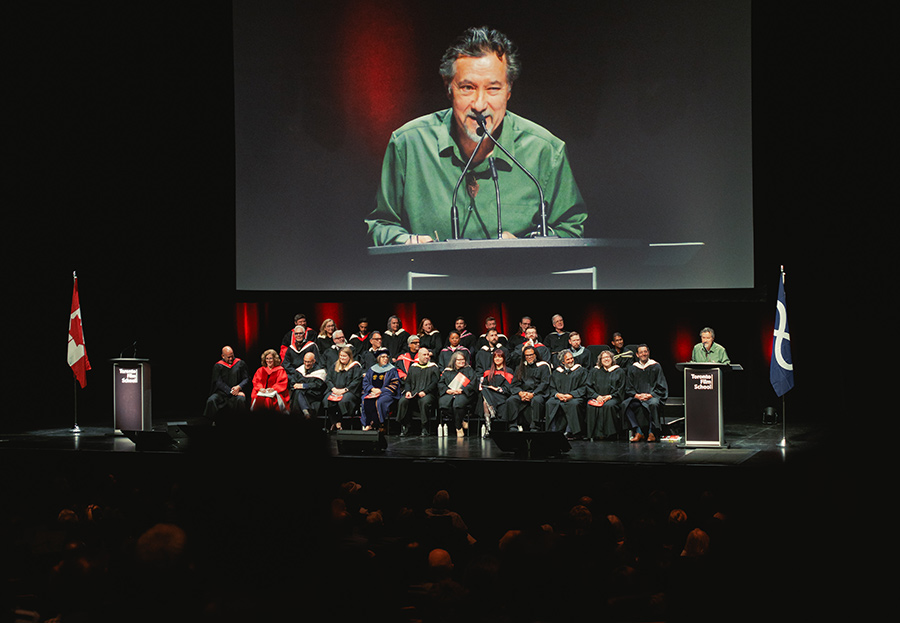
The ceremony began with an opening prayer and reflections from Senator Paul Irvine of the Toronto & York Métis Council, who illustrated the importance of perseverance for grads with a memorable story from his teenage years.
In the summer of 1973, at just 16 years old, Irvine set off with friends on a hitchhiking adventure from Toronto to Vancouver with only $5 in his pocket. The journey quickly took an unexpected turn when the car they were travelling in was involved in a collision near Blind River, Ontario. The two men who had picked them up turned out to be escaped convicts on the run.
While his friends decided to head home after spending the night in unlocked jail cells, Irvine continued westward alone, facing further mishaps along the way. Despite all the setbacks, he pressed on – an experience that would become a defining lesson in resilience that has served him well throughout his life and career in music and, later, as an entertainment paralegal.
He encouraged graduates to reflect on how far they had already travelled while remaining open to the possibilities ahead.
“You are the generation in the driver’s seat now. Take a moment to check your rearview mirror. Look back on the road you travelled. Look back on your accomplishments,” he urged.
“Now you have the delightful task of deciding what to do with the days that are before you. If you spend them watching the clock, you will no doubt be mindful of time, but you may miss the moment.”
Andrew Barnsley’s Welcome
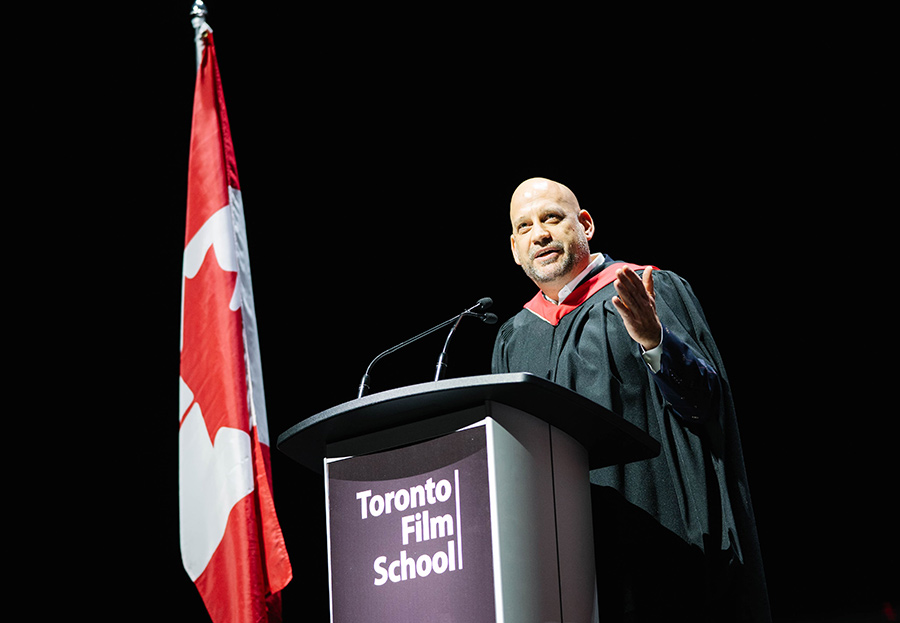
Up next was TFS President Andrew Barnsley, who congratulated the Class of 2026 on reaching this important milestone.
“The programs you’ve completed are formidable. They challenge both your creativity and your competency. They are designed to help you realize the potential of your dreams, and today, you are one step further along that path,” he said.
“You have embarked on a journey of growth and learning, and you have emerged as graduates equipped with knowledge, skills and experience that will propel you forward in your careers and personal lives. Be proud of what you have accomplished here.”
Barnsley also recognized the military-connected graduates and families in attendance, highlighting the more than $4 million invested in Canadian Armed Forces Bursaries since 2015, helping more than 1,800 service members and their spouses and children pursue their education. He also celebrated the achievements of Indigenous graduates, noting that the Indigenous Student Bursary has supported more than 1,000 students with a total investment of $4.3 million since its launch in 2022.
Beyond the support that helped students reach this milestone, Barnsley reminded graduates of the value of the connections they had made along the way – encouraging them to recognize the value of the relationships they had built during their time at TFS.
“These classmates are now your colleagues and part of your professional network. The friendships you’ve made here will be every bit as valuable as what you have learned,” he said.
Keynote Speaker Shamier Anderson
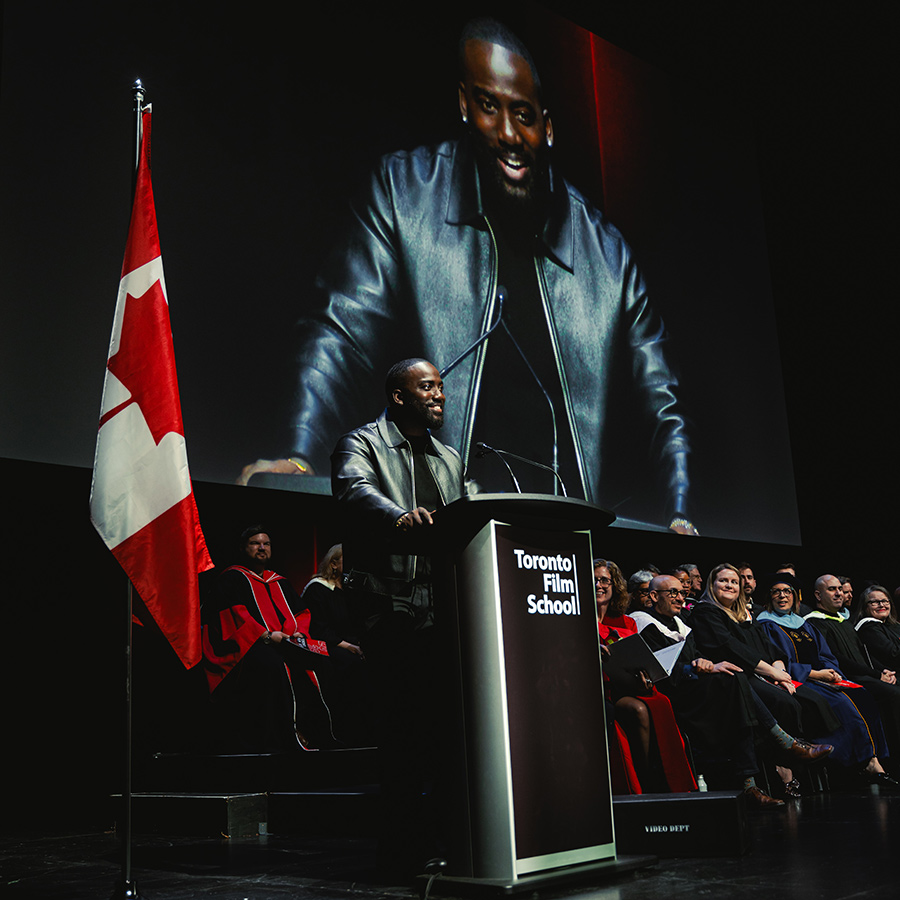
This year’s keynote speaker, acclaimed Canadian actor, writer, producer and director Shamier Anderson, brought a wealth of experience from both sides of the camera to his address.
Anderson’s acting credits in film include John Wick: Chapter 4, Bruised, Stowaway and The Luckiest Man in America, while his television work includes Apple TV’s Invasion and the Paramount+ limited series Hate the Player. A 2019 TIFF Rising Star, Anderson recently made his directorial debut with Call Me Tim, which he also wrote, produced and starred in.
Drawing on his own journey through the entertainment industry, Anderson delivered an energetic and deeply personal address centred on the three lessons he’s taken away from his experiences in the screen industry: where you start doesn’t determine where you finish, don’t wait for permission, and get comfortable with being uncomfortable.
A Scarborough native, Anderson reflected on growing up in Toronto’s east end, far from the perceived glamour and opportunities of Hollywood. While he had ambition and determination, he credited his mother with believing in him long before the rest of the world knew his name. Her support helped shape his outlook, he said, as he reminded graduates that their beginnings need not define their futures.
“Where you come from may shape your story, but it does not have to determine your destination,” he told graduates.
His second lesson was about taking initiative rather than waiting for someone else to open a door.
Anderson spoke candidly about the many rejections and setbacks he has encountered throughout his career, despite working alongside acclaimed performers including Nicole Kidman, Halle Berry and Keanu Reeves. Rather than allowing those experiences to discourage him, he found ways to create opportunities of his own.
“One of the biggest lessons I’ve learned is that nobody’s coming to give you permission to pursue your dreams. Not your agent, not your manager, not your studio exec, not your boss. And at some point, you have to give yourself permission – permission to try, permission to fail, and permission to believe you belong in rooms you’ve never been invited to,” he said.
“Sometimes the door doesn’t open because you’re supposed to build your own, and that’s exactly what I decided to do.”
That philosophy led him to establish his own production company, Bay Mills Studios, and co-found The Black Academy, a nonprofit organization that celebrates Black talent in Canada and helped create CBC’s The Legacy Awards.
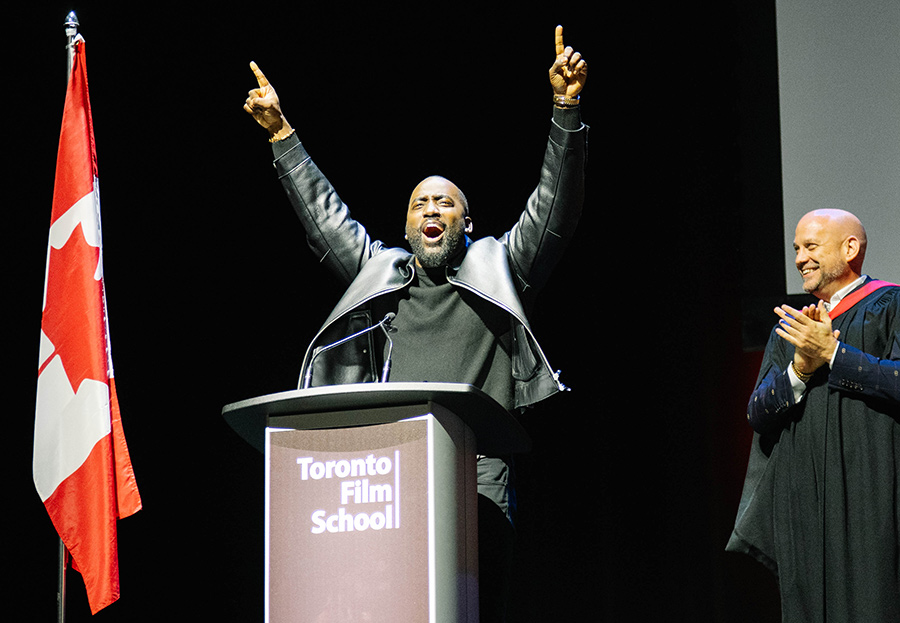
Encouraging graduates to take a similar approach, Anderson challenged them to stop waiting for someone else to recognize their potential.
“Don’t wait – make that film, write that script, build that company, make that set design, build that world, and create things you wish existed,” he said. “As a famous sports company would say, ‘Just do it!’”
His final lesson was perhaps the most personal. Anderson acknowledged that self-doubt and uncertainty don’t necessarily disappear with success, sharing that even now, he continues to question himself and his abilities.
But he said he’s learned that confidence often comes through action rather than before it.
“Confidence isn’t always something you have before you begin. Sometimes confidence is what you earn by beginning – by showing up, by failing, by failing, by failing, by getting back up,” he said. “You cannot build an extraordinary life while constantly protecting yourself from ordinary failure.”
As he reflected on his own journey from Scarborough to an increasingly prominent career in the entertainment industry, Anderson reminded graduates not to be embarrassed by starting at the bottom or being a beginner. Instead, he encouraged them to remain relentless, kind and grounded in the communities that helped shape them.
His final piece of advice was to remember those who are still working their way up.
“Please don’t forget to send the elevator back down,” he said, encouraging the next generation of creatives to open doors for those who follow.

Student Graduation Speaker Sana Ehtasham
Writing for Film & Television graduate Sana Ehtasham delivered the Class of 2026’s Student Graduation Speech, offering a heartfelt and often humorous reflection on the creative process, the importance of believing in oneself and the courage to put ideas into the world.
Ehtasham, a writer, director, filmmaker, producer and fashion designer, graduated with a 4.24 CGPA and received repeated recognition on the President’s and Honours Lists. During her time at TFS, she also participated in student council, peer tutoring and cross-program collaborations, developing and producing her greenlit thesis film, The Tea Party.
Opening with a playful reference to the late-night assignments, rewrites and retakes familiar to students across TFS’s creative programs, she joked that their greatest collective work of fiction had been convincing themselves they had plenty of time before each deadline.
She also thanked the faculty members who recognized potential in their students before they could see it in themselves, as well as the families and friends who supported them through the late nights and missed dinners. She also offered a heartfelt tribute to her own family, including her parents, husband and three children.
“I also want to recognize someone whose hard work made this possible. She’s creative. She always has a story to tell. She never gives up, and she celebrates life with gratitude,” she said. “I could say so many wonderful things about her, but they’ve given me only a few minutes. Her name is Sana. It’s me.”
Likewise, Ehtasham encouraged her fellow graduates to take pride in what they had accomplished in their time at TFS, reminding them that only they truly knew what it had taken to reach this moment.
Reflecting on their 18 months of study, she described creativity as a process of developing, questioning, defending and reworking ideas – and learning to accept feedback without losing confidence in one’s creative voice.
She recalled feeling overwhelmed while working on her thesis film until an instructor encouraged her to stop overthinking it and trust the preparation she had already put in.
“Although, as a producer, I would have liked to know how much the magic was going to cost,” she joked.
But that advice changed how she approached her work. An idea, she reminded graduates, can remain in their heads or sit on a desktop indefinitely. The magic happens when they finally give it life and allow others to experience it.
She also encouraged graduates to share their work and talk openly about their skills and ambitions, recalling advice from her program director, Michelle Daly, that made a lasting impression on her.
“Don’t be afraid to start that conversation. It could lead you to your next collaboration, and maybe one day, an Oscar,” she said.
Her message to the Class of 2026 was ultimately a call to action: take chances, keep creating and commit to the work, even when inspiration is hard to find.
“Make something absolutely weird. Make something absolutely beautiful. Make something that feels like you,” she said. “Talent can get us started. It takes discipline to show up for yourself, even on the days when you don’t feel inspired. That’s how we build consistency. That’s how we succeed.”
Before wrapping up, Ehtasham recalled how her sitcom instructor, Alan Resnick, would regularly ask her, “Sana, where are the reactions?” Taking the opportunity to put that lesson into practice, she invited the audience to give themselves a well-deserved round of applause.
“We made it. Now go make something only you would think to make,” she said.
Celebrating Indigenous Graduates
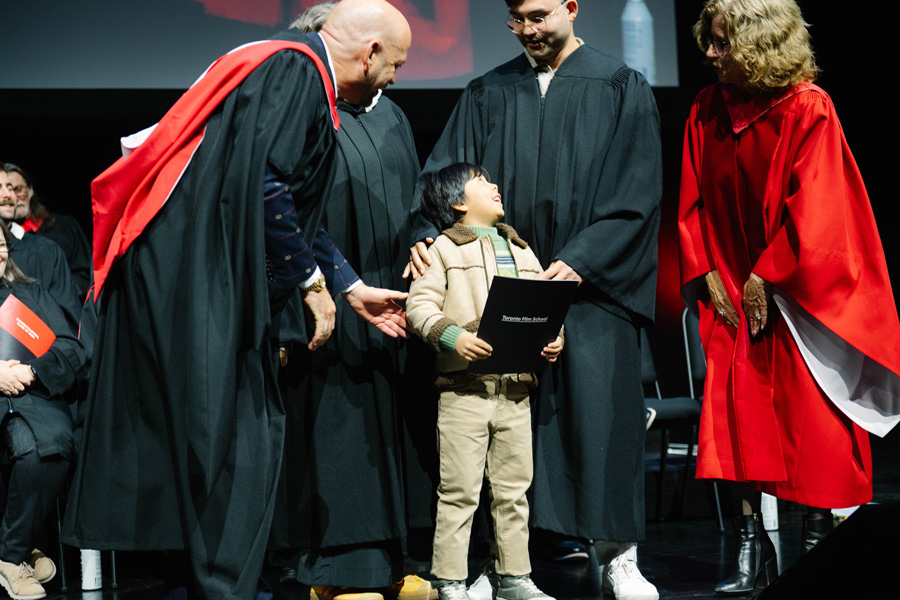
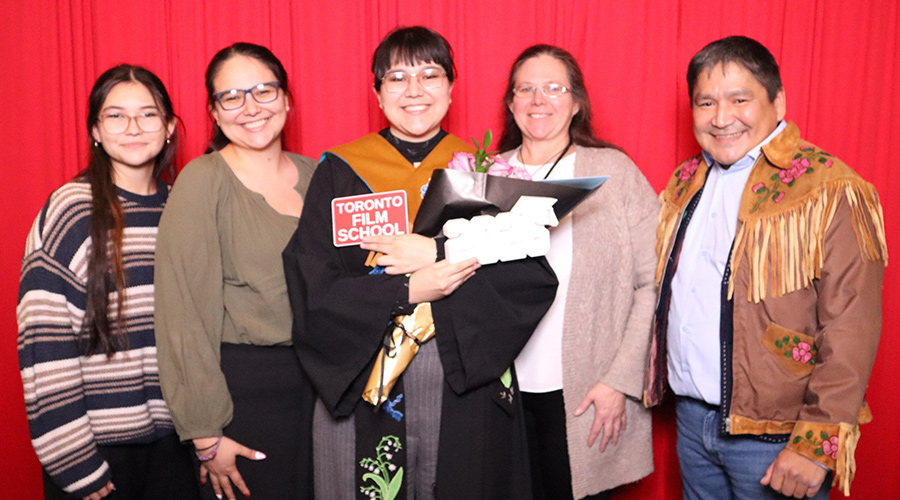
The ceremony also included a special recognition of TFS’s Indigenous graduates through the presentation of graduation gifts – a Blackfoot people’s mountain blanket, a Métis sash or an Indigenous stole – continuing a meaningful tradition of Indigenous gifting.
Jessica Gruchy, Manager, Indigenous and Partnership Engagement, explained that the gifts were thoughtfully selected by the Indigenous Student Advisory Council (ISAC). The blanket comes from Boy Chief Trading Post, an Indigenous-owned and operated retail company located on Siksika Nation, the stole was handcrafted by an Elder and artist in Yellowknife in collaboration with local beaders, while the Métis sash represents a connection to Métis identity and culture.
She also spoke of the significance of gifting and draping a blanket over a graduate’s shoulders – a sacred tradition for many First Nations people.
“It symbolizes wrapping each student in the knowledge that they have gained and the support of their communities as they step forward into the next chapter of their journey,” she said.
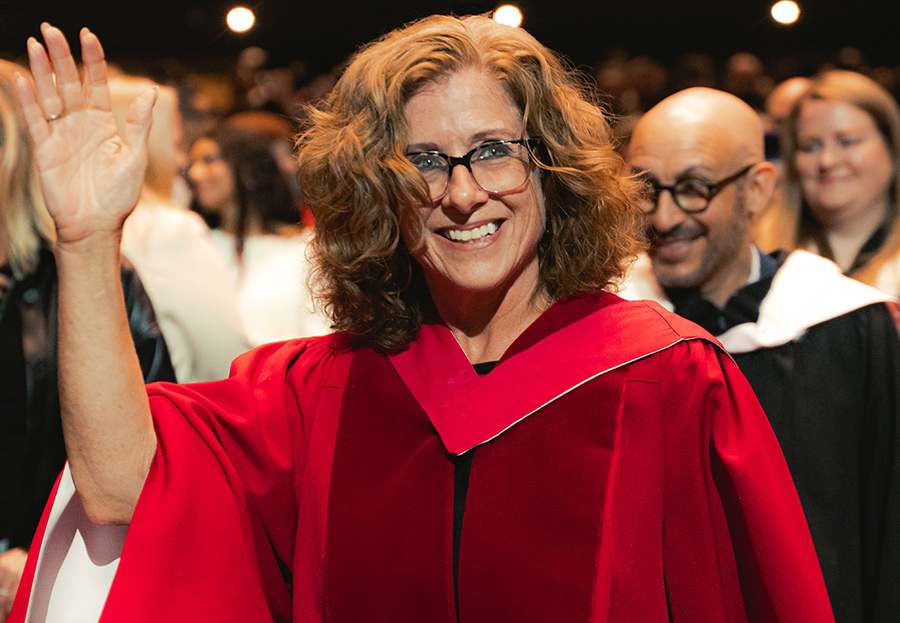
Deanna McQuarrie, Vice President, Student Experience and Co-Chair of the ISAC, presented the gifts to Indigenous graduates in attendance.
Closing Remarks and Cap Toss
Dr. Julia Christensen Hughes, President and Vice Chancellor of Yorkville University, closed the ceremony by reflecting on the messages shared throughout the afternoon and the importance of storytelling in bringing people together.
Drawing on Irvine’s opening story, Anderson’s advice and Ehtasham’s reflections on creativity, she highlighted a common thread running through all three addresses: the power of stories to connect, inspire and make a difference.
“I love the ‘Don’t wait for permission’ advice,” she said of Anderson’s keynote, adding that his reminder to get comfortable with being uncomfortable was particularly meaningful. “It is in the discomfort that we continue to learn and grow and have impact.”
She also praised Ehtasham’s reminder that creativity requires hard work and courage, and encouraged graduates to uncover what they can uniquely contribute to the world: “What fabulous advice for each one of us to grab hold of our own stories, and try to understand and uncover what we can uniquely contribute to the world,” she said.
Christensen Hughes also expressed her pride in the graduates and the work of the TFS community, emphasizing the value of education that is aligned with industry and equips students with the skills to pursue their ambitions. She encouraged graduates to stay connected with the school, return to share their experiences and help mentor the next generation of creative talent.
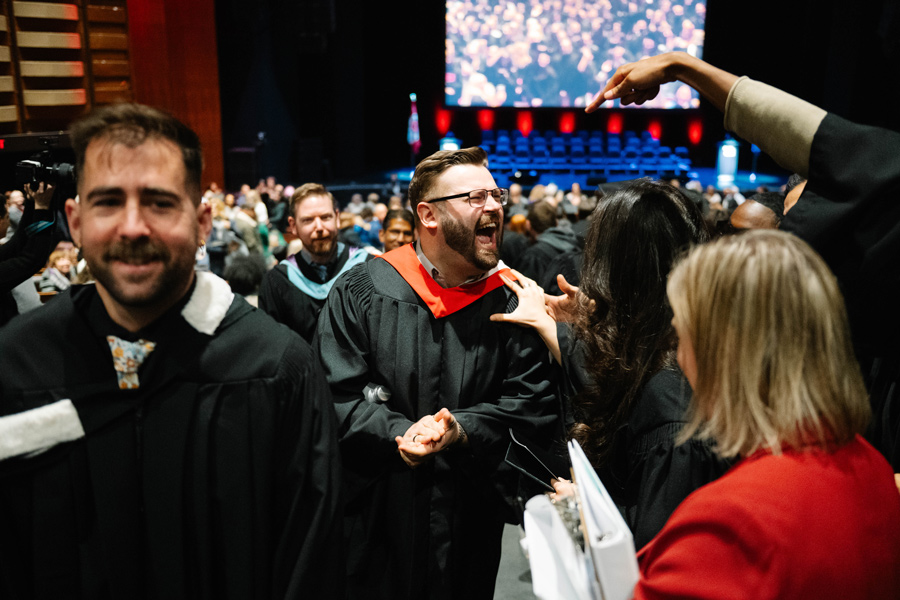
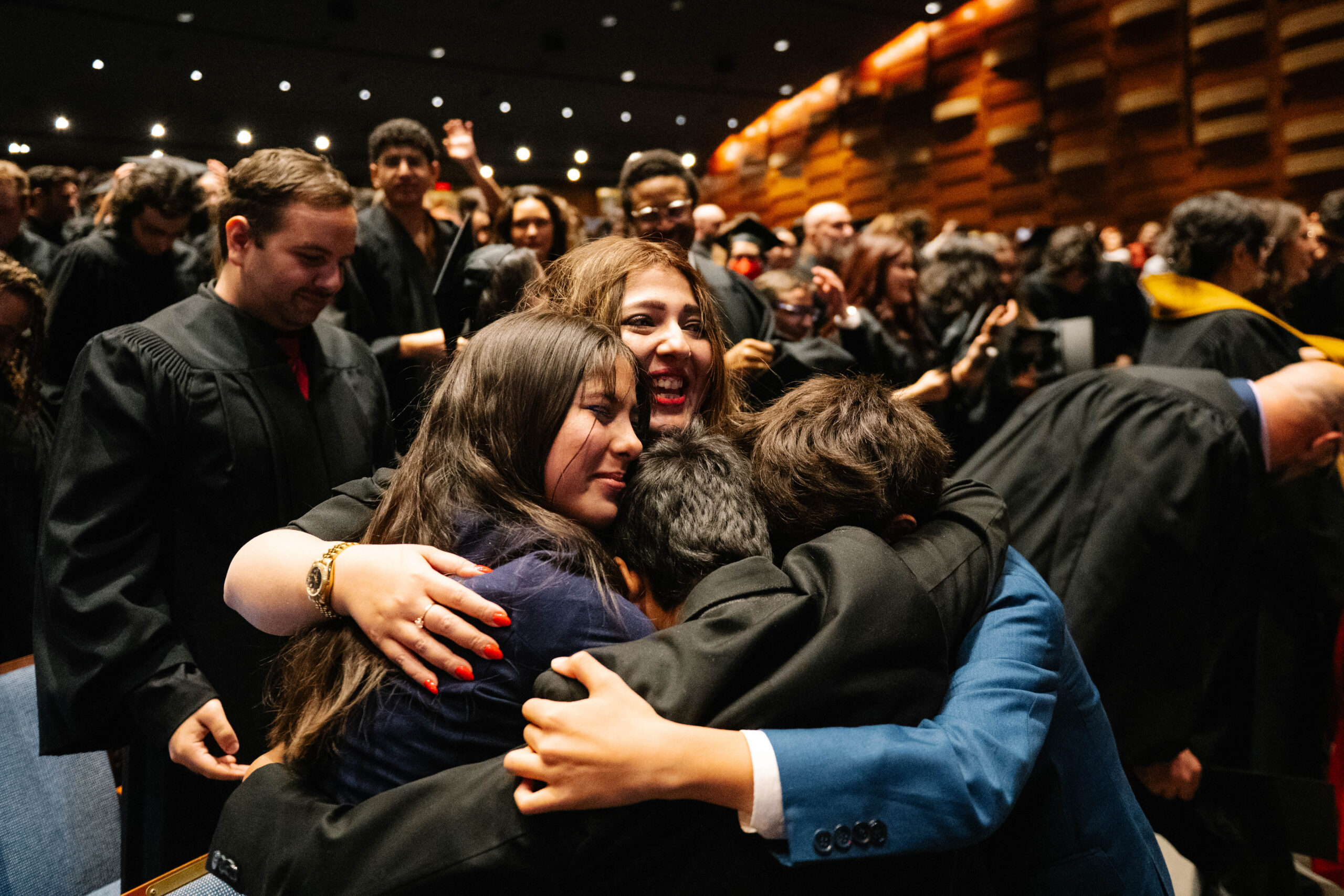
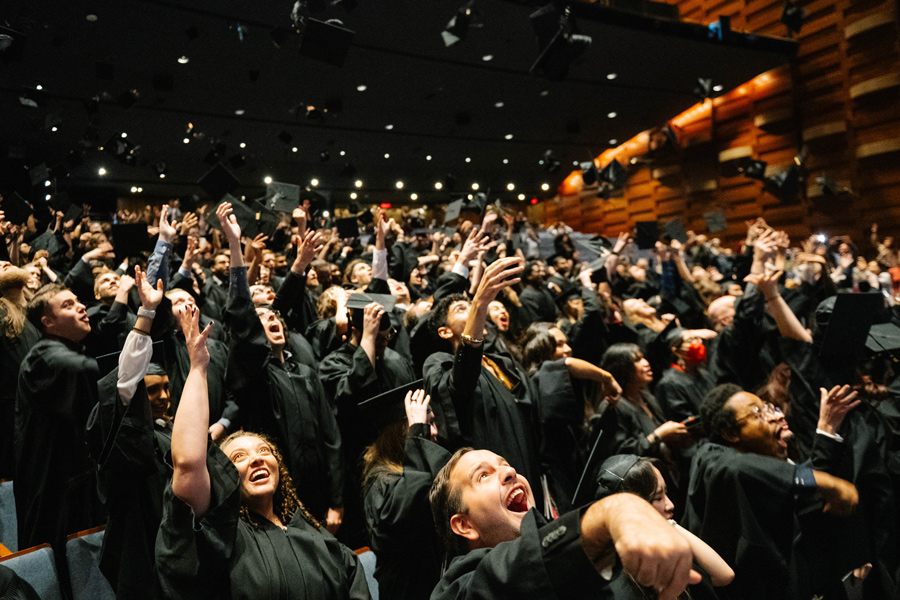
Then came the moment everyone had been waiting for. Inviting the Class of 2026 to rise and prepare for their celebration, Christensen Hughes asked graduates to let out a cheer of joy, relief or whatever emotion they were feeling after all their hard work.
“Graduating class of 2026, you have done it. You have set a goal, and you have worked hard and you have achieved,” she said.
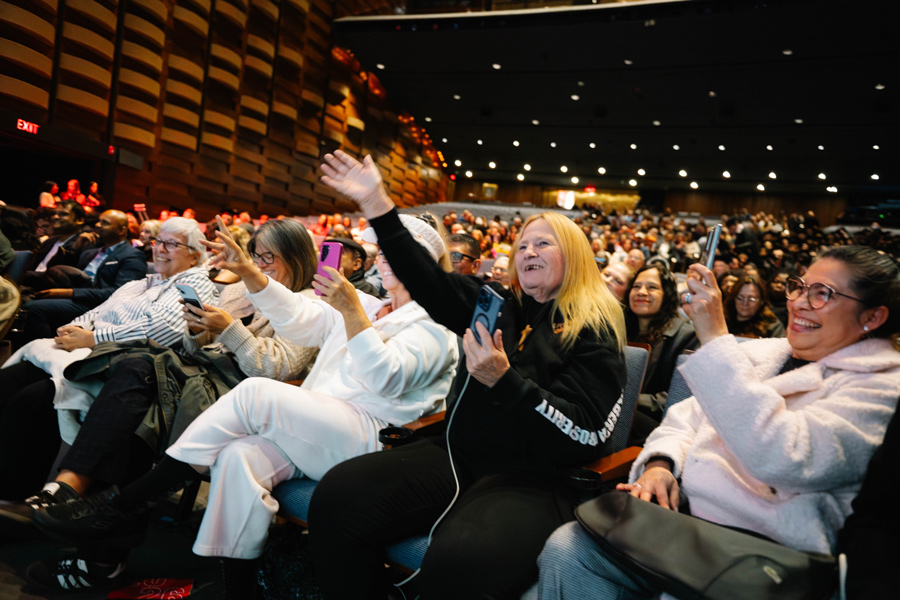
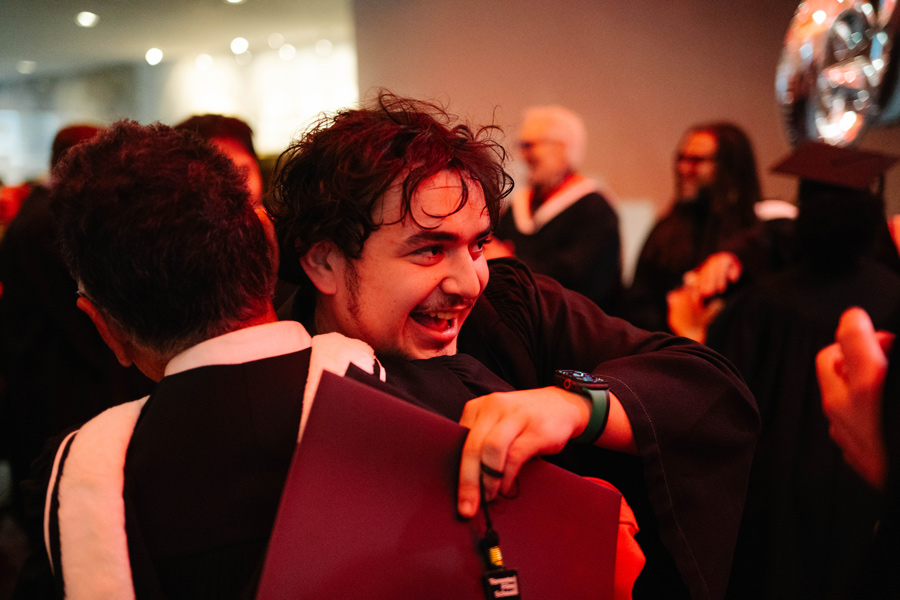
With a countdown of “One, two, three!” the graduates erupted in celebration, marking the end of their time at TFS and the beginning of whatever comes next.
TFS Program Awards
Best Actor/Actress Award, sponsored by Jolt 390 Photography
Yuliya Shcherbak
Film Production Trailblazer Award, sponsored by Canada Film Equipment
Cullen Smith
Video Production Excellence Award, sponsored by Vistek
Jessica O’Neal
Excellence in Screenwriting Award, sponsoted by Adobe
Danika Paola Castro (on-campus)
Jazmin Batey (online)
Graphic Design Creativity in Design Award, sponsored by Adobe
Chelsea Kaitlin Kumar (on-campus)
Caroline Dos Santos Da Fonseca (online)
Video Game Design & Animation Creative Achievement Award, sponsored by XP Gaming
Seyed Koosha Lary Baghal
Best Video Game Developer Award
Eric William Hames Milroy
TFS President’s Awards
(given to grads with the highest CGPA in each program)
Acting for Film, TV & the Theatre
Yaz Savas
Film Production
Jason Da Costa
Graphic Design & Interactive Media
Lauren Minhinnett
Video Game Design & Animation
Johanna Liu Liang
Cleber Machado
Video Game Design & Development
Jacob Zivontsis
Writing for Film & Television
Zeinab Darwich
Sana Ehtasham
Graphic Design & Interactive Media (TFSO)
Caroline Dos Santos Da Fonseca
Sharon Jim
Video Production (TFSO)
Natalia Villanueva Arcila
Writing for Film & Television Associate (TFSO)
Brenda Tijanic
Morgan Holmstrom