
TFS Instructor Samiramis Kia Brings Debut Feature Drifting Stones to the Diaspora Film Festival
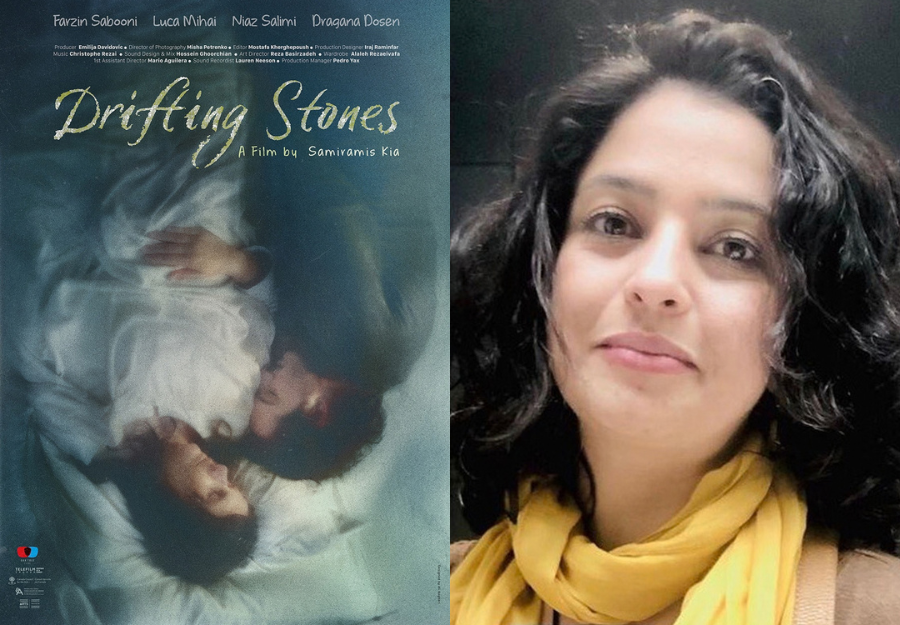
Toronto Film School instructor Samiramis Kia is bringing her debut feature, Drifting Stones, to the 2026 Diaspora Film Festival (DFF) for its Canadian premiere.
Kia, an Iranian-Canadian writer-director and film educator based in Toronto, shot the 79-minute film in Kurdish and English. Drifting Stones centres on an estranged father and son, drawn back together by the mother’s final days.
In her director’s statement, Kia describes what lies beneath that premise: “At its core, the film explores the quiet struggles that define us, the unseen battles we fight within. A father and son move through grief, shaped by the lingering presence of a mother who is no longer there – yet whose absence fills every space.”
That story of distance, and of two people shaped by different languages and worlds, now reaches Toronto audiences at DFF, which runs November 5-8 at Innis Town Hall Theatre, 2 Sussex Ave. Founded in 2000 as a charitable not-for-profit, DFF showcases work exploring migration, immigration and cultural diversity, with particular attention to independent Canadian filmmakers from ethnic minorities.
More information about the film’s November 8 premiere at DFF, including ticket sales, can be found HERE.
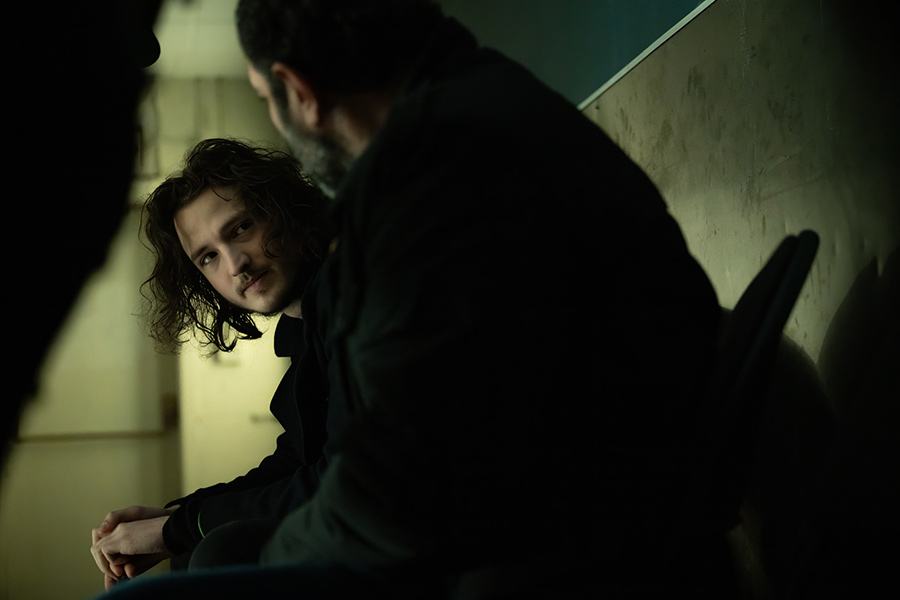
Watch the trailer HERE.
In the following Q&A, Kia discusses the silences that shape Drifting Stones, the role of language between father and son, and her next project, Of Hands & Memories. She also reflects on making her first feature with producer Emilija Davidovic, TFS’s Film and TV Production Program Director.
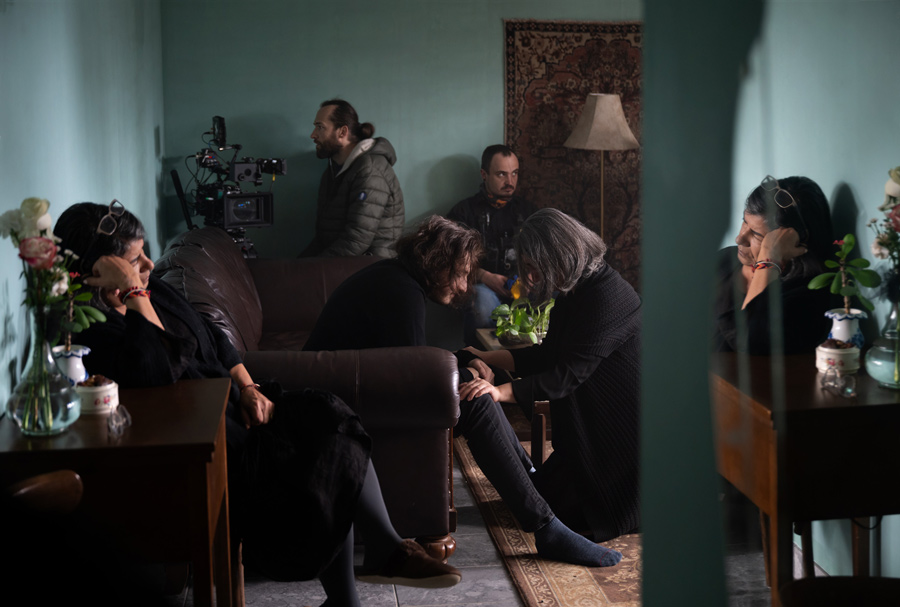
Your director’s statement describes Drifting Stones as emerging from silence – from unspoken words, buried tensions and meaningful glances. What drew you to exploring this family’s story through what remains unsaid?
I believe the most important things are often never revealed. They are the tensions we carry with us throughout our lives—things that may never be articulated, but still shape our relationships, our choices, and the way we relate to one another. I think part of a filmmaker’s job is to reveal those invisible tensions, not necessarily by explaining them, but by allowing us to feel their presence.
In Drifting Stones, I wanted to create that space for the audience—to notice a glance, a hesitation, the distance between two people, or something that a character chooses not to say. For me, those moments can sometimes reveal much more about a person than dialogue can.
The story centres on a father and son coming together at a moment of profound loss, with years of distance and unresolved tension between them. What did you want to explore about family, grief and the possibility of reconnection through their relationship?
Family relationships are always difficult to analyze because they are so complex. They come with responsibilities, expectations, and a set of accepted norms that shape the way we understand our roles within a family. And I think it becomes even more complicated when we talk about parents and children, because there is such a strong sense of responsibility and expectation attached to those relationships.
What interested me was how these two people could reconnect despite all of that history and distance. There is a reconnection that happens between the father and son, but interestingly, it happens through the mother, who is not even physically present. Their coming together is connected to her, it is about her, and in some ways it is resolved through her.
So even though on the surface Drifting Stones is the story of a father and son coming together, at its core, for me, it is the story of a woman. Her absence becomes a presence that brings these two men back into relation with one another.
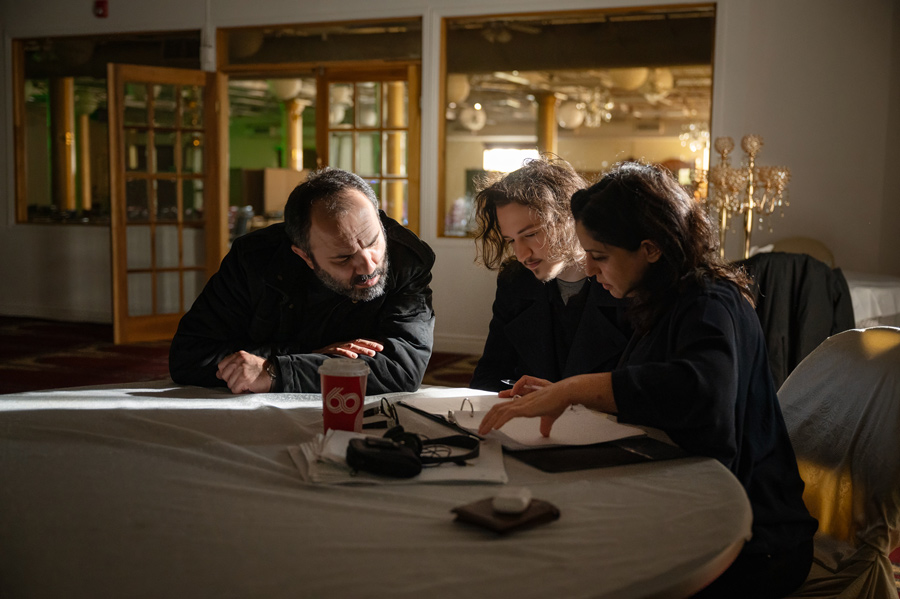
The film moves between Kurdish and English. How did language shape the characters and their relationships, and the way you wanted to tell this story?
The distance between the father and son comes partly from the fact that they have lived in two completely different places and speak two different languages. They are father and son, but in many ways they have been shaped by two different worlds.
I was interested in how language can become part of that distance. It is not only about whether you understand the words someone is saying. Language carries a place, a culture, memories, and a way of understanding the world. The son has never even been to the place where his father comes from, so there is a whole part of his father’s life that is unfamiliar to him.
So, moving between Kurdish and English was very natural to the story. These two languages represent the different worlds the father and son come from, but the film is also interested in whether they can find a way to meet somewhere in between.
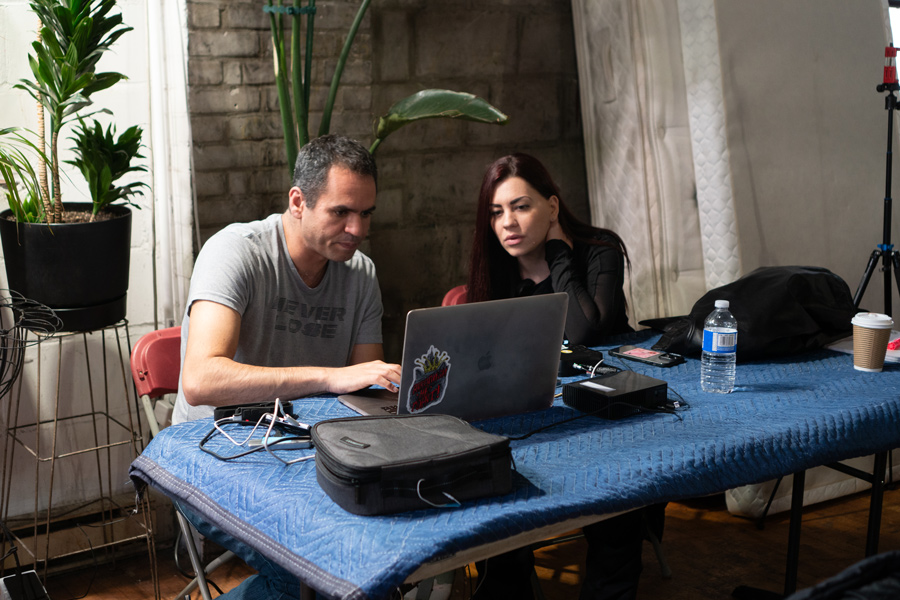
This is your debut feature as a writer-director, produced by TFS Film & TV Production Program Director Emilija Davidovic. What was that collaboration like, and what did you learn from making your first feature?
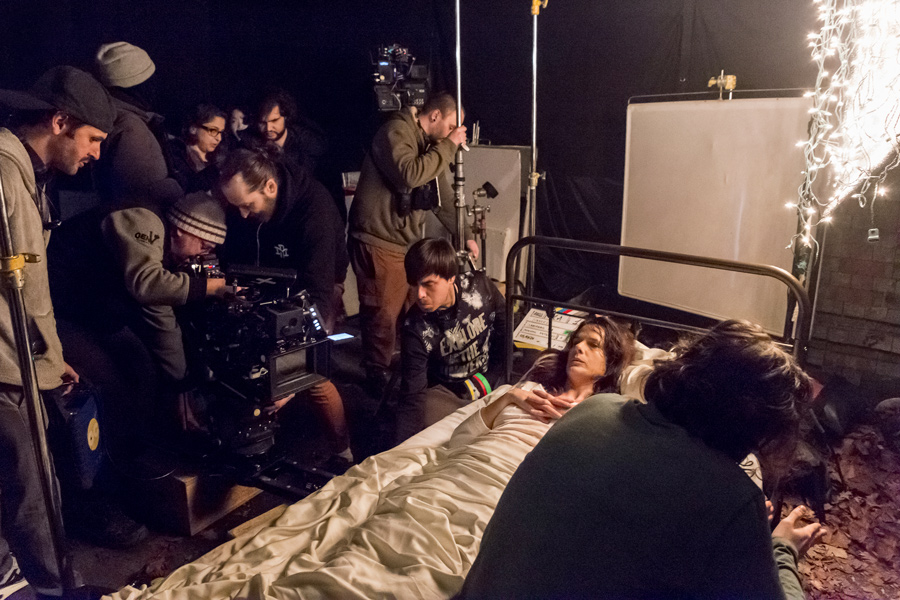
Making a feature, especially an independent and very low-budget feature, requires an enormous amount of commitment, and having a producer who believes in the film and stays with it through all the difficulties is incredibly important. I believe there was a mutual trust between Emilija and me throughout the process. There were so many limitations and challenges along the way, but the final result is something we are both very proud of.
What I learned from making my first feature is that a feature film requires a very different kind of endurance. I had made several short films before, but with a feature, you have to live with the project for years. You have to keep returning to the same story through writing, financing, production, editing, and all the stages of post-production, while constantly making decisions and solving problems.
I also learned that filmmaking is really an exercise in letting go. You begin with a film in your imagination, but then you bring in a producer, actors, a cinematographer, an editor, a sound designer, and many other collaborators, and each person brings something of their own to it. There are also limitations – time, money, locations – and you constantly have to negotiate between what you imagined and what is actually possible.
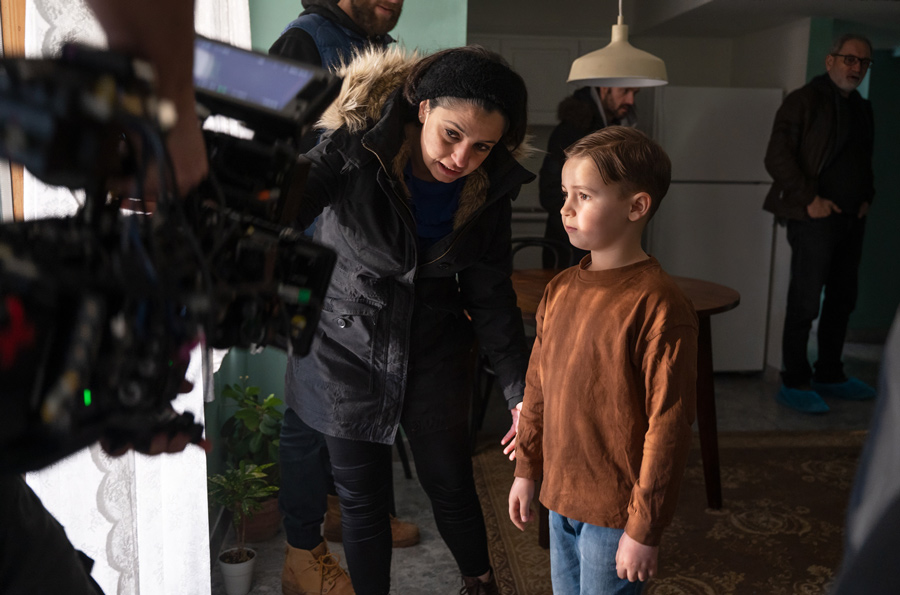
You’ve been teaching at Toronto Film School since 2022. Has your experience as an educator influenced your filmmaking practice? Has making Drifting Stones likewise changed the way you approach teaching?
I think teaching and filmmaking have a reciprocal relationship. Teaching requires me to constantly revisit what I know, question my own understanding of cinema, and find ways to communicate ideas that I might otherwise take for granted. My students also bring different perspectives, experiences, and approaches to storytelling, which often challenge my own way of thinking.
Making Drifting Stones has certainly influenced the way I approach teaching. It reminded me that filmmaking is not simply about mastering the technical aspects of the craft. It is also about collaboration, persistence, problem-solving, and learning how to work within limitations without losing sight of your artistic vision.
I think one of the most important things I can share with my students is that there is no single formula for making a film. Every project comes with its own challenges, and sometimes the limitations themselves lead to unexpected creative possibilities.
Teaching allows me to reflect on my practice, while filmmaking allows me to bring real experiences, including my mistakes and the lessons I’ve learned, back into the classroom. In that sense, I see them as two parts of the same journey.
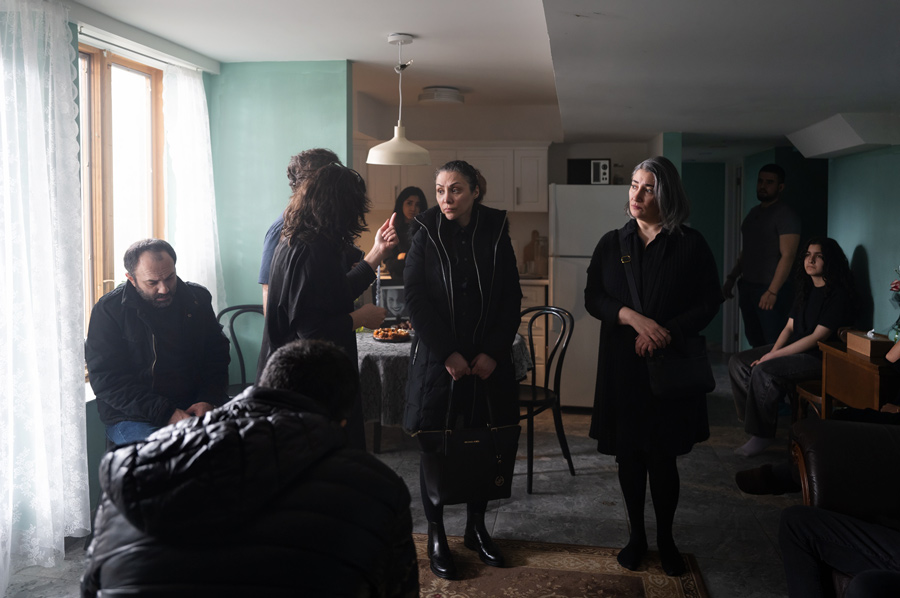
What does it mean to bring Drifting Stones to a festival whose focus is on diaspora, migration and cultural identity?
I believe diaspora and migration are, at their core, quintessentially Canadian subjects. Canada is a country shaped by migration, displacement, and different relationships to land and belonging. Even the land acknowledgements we hear regularly remind us to think about where we are, whose land we are on, and our relationship and responsibility to that land. In that sense, I feel that Drifting Stones is also a very Canadian story.
At the same time, the Diaspora Film Festival has been running for more than 26 years, and I think it has created a very rich space for independent and artistic cinema, bringing films from different cultures and experiences to audiences who genuinely care about this kind of filmmaking.
It is a great honour to have Drifting Stones participate in this event, and I am very excited to finally share the film with an audience and see how people connect with it.
You’re now developing your second feature, Of Hands & Memories. How has making Drifting Stones shaped what you want to explore or do differently with your next film?
Making Drifting Stones taught me a great deal about what it means to sustain a story over the length of a feature, but it also taught me how much filmmaking is about letting go.
With Of Hands & Memories, I would like to take a looser and more playful approach to the filmmaking process. With my first feature, perhaps I felt a greater responsibility to hold onto what I had imagined and planned. Now I am more interested in leaving room for discovery – for the actors, the locations, the camera, and unexpected things that might happen during the process.
Thematically, I am still drawn to family relationships, memory, and the things that remain unresolved between people, but I don’t want to approach them in exactly the same way. I want to give myself more freedom to experiment and perhaps even surprise myself. I think Drifting Stones gave me the experience and confidence to trust the process more. With the second feature, I want to know where I am going, but not necessarily control every step of how I get there.

